Best Beginner Electric Guitars: The Yamaha Pacifica and Its Rivals
A good beginner electric is easy to play, stays in tune, and is versatile enough for any style — and you do not need to spend much to get one. The Yamaha Pacifica is the runaway favourite. Here are three, how we chose them, and what to expect.
HobbyStack may earn a commission from links on this page at no extra cost to you. Our picks are chosen on merit; the commission helps fund the research.
- Playability matters far more than looks — a guitar that is easy to fret keeps you practising.
- The Yamaha Pacifica is the most-recommended beginner electric: versatile, well-built, and great value.
- A versatile pickup layout (like HSS) covers clean, blues, and rock tones so you can explore any style.
- Budget for a small amp, a cable, a tuner, and a strap too — the guitar alone does not make a sound.
- A cheap guitar that is properly set up plays better than an expensive one that is not.


Why playability beats looks
The number one reason beginners quit is a guitar that hurts to play — high strings, a fat neck, buzzing frets. So the most important thing in a first electric is not the brand on the headstock or the finish; it is playability: a comfortable neck, low-but-clean string height (action), and frets that do not buzz. A guitar that is easy to fret is one you will actually pick up every day.
This is exactly why the Yamaha Pacifica dominates beginner recommendations — Yamaha builds them to a consistently high standard, so even the cheapest models play well out of the box, which is rare at the price.
How we picked
We rated beginner electrics on the things that keep a new player going. Playability: a comfortable neck and good factory setup, because an easy-to-fret guitar is one you keep playing. Versatility: a pickup layout (ideally HSS — humbucker plus two single-coils) that covers clean, blues, and rock, so the guitar does not limit what you explore. Build and tuning stability: solid hardware and tuners that hold pitch, since a guitar that drifts out of tune is discouraging. Value: maximum quality per dollar, because the smart move is to keep budget back for the amp, cable, tuner, and strap you also need. The Pacifica line nails all four, which is why it anchors this list.
 Best budget electric
Yamaha Pacifica PAC012
$200The budget Pacifica, and one of the few genuinely good electrics at this price. It keeps the things that matter — a comfortable, easy-to-play neck, Yamaha’s reliable build and tuning stability, and a versatile HSS pickup layout that covers clean shimmer, bluesy bite, and rock crunch — while trimming cost on the hardware and finish. It is not as refined as the PAC112V (the pickups and bridge are more basic), but for the tightest budget it plays far better than anything else near the price and will not hold a beginner back. Get it set up well and it is all the guitar a new player needs.
What's good
- Excellent playability for the price
- Versatile HSS pickups
- Reliable Yamaha build and tuning
- Leaves budget for an amp
What's not
- Basic pickups and bridge vs the 112V
- Plainer finish and hardware
- May want a setup out of the box
 Best all-rounder
Yamaha Pacifica PAC112V
$330The single most-recommended beginner electric guitar, and the one most new players should buy. The PAC112V is a step up from the 012 in every way that counts: better pickups with a coil-split (so the humbucker can also give single-coil tones, widening its range further), a smoother vibrato bridge, and the kind of neck and fretwork you normally find on much pricier guitars. It is genuinely versatile — comfortable for clean practice, bluesy lead, or rock rhythm — and well-built enough that you will not outgrow it for years. It costs more than the 012 but is the sweet spot of quality and value; for most beginners it is simply the right answer.
What's good
- Outstanding playability and fretwork
- Versatile coil-split HSS pickups
- Quality build you won’t outgrow soon
- The proven default for beginners
What's not
- Costs more than the entry 012
- Vibrato bridge needs occasional tuning care
- Still needs an amp and accessories
 Best step-up
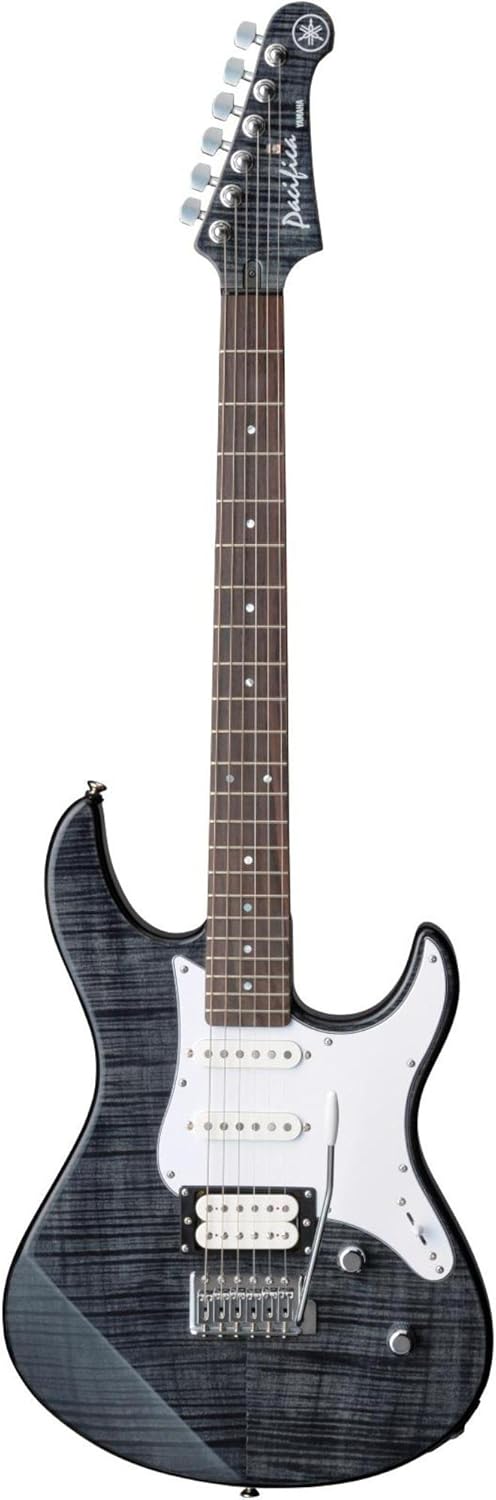
Yamaha Pacifica PAC212VFM
$500The step-up Pacifica for the beginner who already knows they will stick with it (or who simply wants something nicer from the start). The 212VFM keeps everything that makes the line great — superb playability, versatile HSS tones — and adds upgraded pickups for a fuller sound, better hardware including a more stable bridge and tuners, and a genuinely handsome flame-maple top. It plays and feels like a guitar well above its price, and it is one you will happily keep as a main or backup instrument for years. It is more than a casual beginner strictly needs, but as a buy-once electric it is hard to fault.
What's good
- Upgraded pickups and hardware
- Beautiful flame-maple top
- Plays like a pricier guitar
- A long-term keeper
What's not
- Pricier than most beginners need
- Gains over the 112V are incremental
- Amp and accessories still extra
A proper setup — adjusting the string height, neck relief, and intonation — transforms how any guitar plays, and cheap guitars often ship needing one. A tech can do it for around $40–60, or you can learn it yourself. A well-set-up budget guitar plays better than a poorly-set-up expensive one, and it removes the "this is too hard to fret" excuse that ends so many beginners.
What to expect
Your first weeks on electric are equal parts thrilling and sore-fingered: pressing steel strings down cleanly builds calluses, and your chords will buzz and mute until your fretting hand toughens and learns the shapes — this is universal and passes within a few weeks of regular practice. A well-set-up Pacifica makes this stage far easier because the strings sit low and fret cleanly. Remember the guitar is only half the rig — you need a small amp, a cable, a clip-on tuner, and a strap to actually make music, so budget for those too. Tune every single time before you play (an out-of-tune guitar sounds bad and trains your ear wrong), keep at it daily even for ten minutes, and within a month you’ll be playing real riffs and simple songs.
The bargain-bin no-brand electric bundles are a trap: they often arrive nearly unplayable — sharp fret ends, high action that can’t be fixed, tuners that won’t hold pitch — and nothing kills a beginner’s motivation faster than fighting the instrument. Spend a little more on a known-good guitar like a Pacifica. A guitar that plays well is the difference between sticking with it and giving up in a month.
Before you buy
Prioritise playability — an easy-to-fret guitar keeps you practising.
A versatile HSS layout covers clean, blues, and rock tones.
Budget for an amp, cable, tuner, and strap as well as the guitar.
Get the guitar set up (action/intonation) for the best playability.
Tune every time you play — strings drift constantly at first.
Electric guitar questions
What is the best beginner electric guitar?
How much should a beginner spend on an electric guitar?
Should a beginner start on electric or acoustic guitar?
What else do I need besides the guitar?
What does HSS mean and why does it matter?
Why does my new guitar sound bad or buzz?
Buy for playability, not looks — and for most beginners that means a Yamaha Pacifica PAC112V, the benchmark beginner electric. The PAC012 is the budget pick that still plays well; the PAC212VFM is the step-up to grow into. Get whatever you buy properly set up, budget for an amp and accessories, tune every time, and practise daily.
The HobbyStack editorial team researches each guide using practitioner communities, published resources, and direct input from active hobbyists. Every guide is reviewed for accuracy before publication and updated when practices change.
About our editorial process →More gear guides
Best Acoustic Guitar Strings for Beginners: Gauge, Coating, and Tone
Fresh strings transform how a guitar sounds and feels — and beginners often play far too long on old, dead ones. Light-gauge strings are easier on new fingers, and coated strings last longer. Here is what to put on your acoustic, how we chose, and what to expect.
Best Beginner Acoustic Guitar 2026: Yamaha FG800 vs Fender CD-60S vs Taylor GS Mini
The first acoustic guitar makes or breaks whether you stick with the instrument. Spend $80 and you'll quit in 6 months. Spend $230 and you'll be playing in 5 years. Here are the three acoustics worth buying as a beginner.
Best Beginner Guitar Amps: From Practice Amp to Modeling Powerhouse
An electric guitar needs an amp to make a sound — but the right beginner amp does far more than get loud. Modern modeling amps pack dozens of tones and effects into a small box. Here are three worth plugging into, how we chose them, and what to expect.
Best Guitar Cables for Beginners: Length, Quality, and Noise
A guitar cable seems like an afterthought until a cheap one fails mid-song or hums with noise. A good instrument cable is reliable, quiet, and lasts years. Here is what to buy, how we chose, and what to expect — and why you do not need to spend a fortune.
Best Guitar Capos for Beginners: Quick-Change, Clamp, and Tuning Stability
A capo clamps across the fretboard to raise your guitar’s pitch, letting you play songs in new keys using the easy open chords you already know. It is a small, cheap tool that unlocks a huge amount of music. Here are three, how we chose them, and what to expect.
Best Guitar Picks for Beginners: Gauge, Material, and What to Try
Picks are cheap, tiny, and weirdly important — the gauge you hold changes how easily you strum and how your guitar sounds. Buy a variety, find your favourite, then stock up. Here is where to start, how we chose, and what to expect.