Best Acoustic Guitar Strings for Beginners: Gauge, Coating, and Tone
Fresh strings transform how a guitar sounds and feels — and beginners often play far too long on old, dead ones. Light-gauge strings are easier on new fingers, and coated strings last longer. Here is what to put on your acoustic, how we chose, and what to expect.
HobbyStack may earn a commission from links on this page at no extra cost to you. Our picks are chosen on merit; the commission helps fund the research.
- Choose light-gauge (12-53) strings as a beginner — easier on the fingers and gentler on the guitar than mediums.
- Phosphor bronze is the standard warm, balanced acoustic string material.
- Coated strings (like Elixir) last three to four times longer but cost more — great if you play often.
- Change strings when they sound dull, look discoloured, or feel rough — not once a year.
- The D’Addario EJ16 is the reliable, affordable default most acoustic players start with.
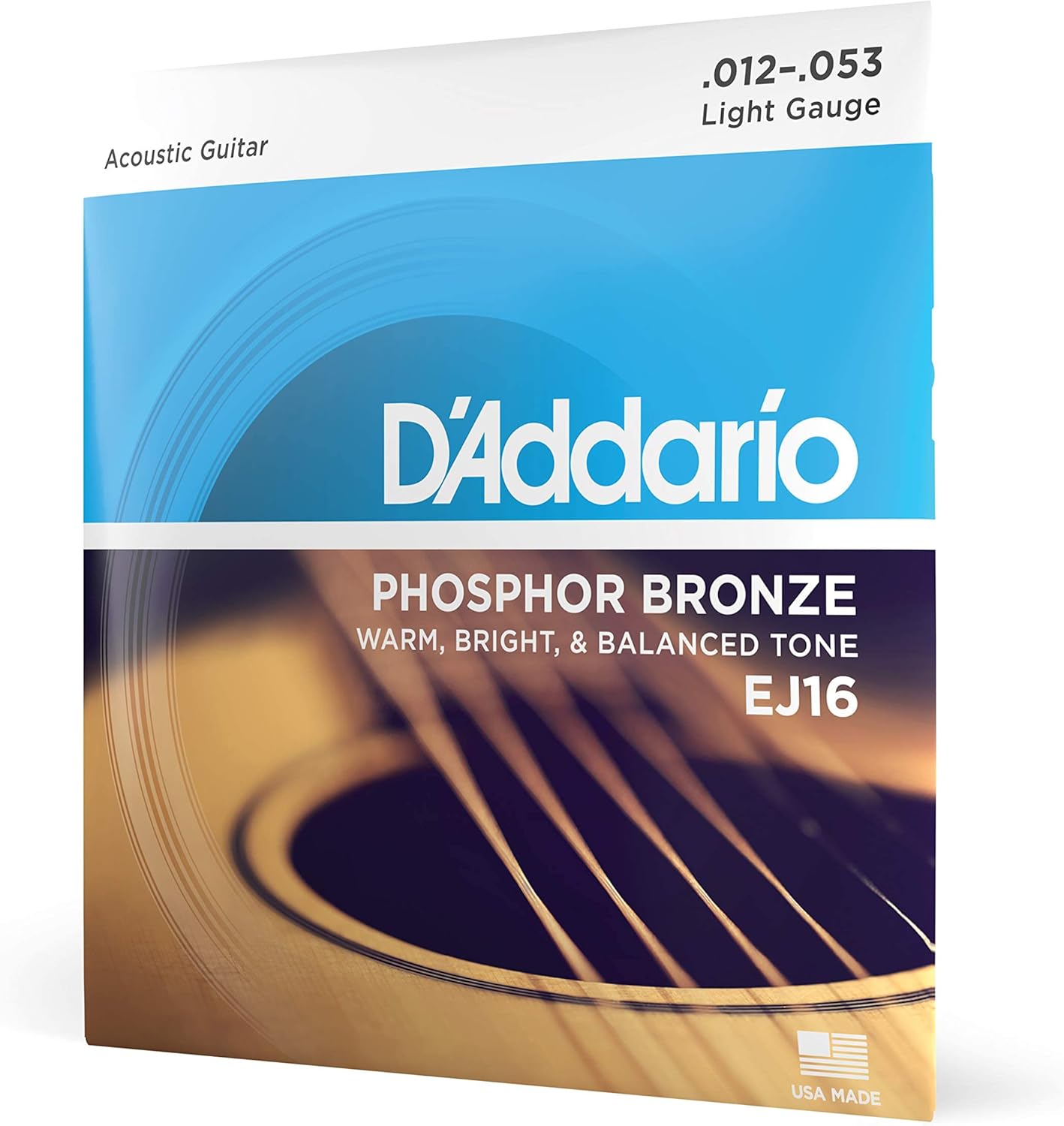


Gauge: go light to start
String gauge (thickness) is the first decision, and beginners should go light (typically 12-53 on an acoustic). Lighter strings take less finger pressure to fret cleanly and bend more easily, which matters a lot while your fingertips are still toughening up and your hands are learning chord shapes. Heavier (medium) strings give more volume and low end but are noticeably harder to play and put more tension on the guitar.
Start light, build calluses and strength, and only experiment with heavier gauges later if you want more volume and do not mind the extra effort.
How we picked
We rated strings on what a beginner actually benefits from. Easy-playing gauge: light (12-53), so the strings take less finger pressure while your hands toughen up. Warm, balanced tone: phosphor bronze, the acoustic standard that flatters most guitars. Value vs longevity: we weighed cheap uncoated strings you change often against coated strings that cost more but keep their tone three to four times longer — both are valid depending on how much you play. Reliability and availability in single sets and multipacks. We picked the affordable default, a richer-toned step up, and a long-life coated set so there is a fit for every player and budget.
 Best value strings
D'Addario EJ16 Phosphor Bronze (Light)
$7The default acoustic string, and the world’s best-selling set for good reason. The EJ16 is a light 12-53 gauge that is easy on beginner fingers, in warm, balanced phosphor bronze that suits virtually any acoustic and any style. It is cheap enough that you can change strings the moment they go dull rather than nursing a dead set for months — exactly the habit a beginner should build. They are uncoated, so they lose their fresh brightness faster than coated strings, and the feel is plainer than premium sets, but for the price and playability they are unbeatable. Buy a few sets and learn to restring.
What's good
- Easy-playing light gauge
- Warm, balanced tone
- Cheap — change them often
- Suits any acoustic and style
What's not
- Uncoated: dulls faster than coated
- Plainer feel than premium sets
- Not the longest-lasting
 Best tone for the price
Martin Authentic SP Phosphor Bronze (Light)
$13The tone upgrade for when you want your acoustic to really sing. Martin’s Authentic SP light set brings the rich, full, projecting phosphor bronze tone the Martin name is built on, in a comfortable light gauge that stays easy to play. It is a small step up in price over a basic set for a noticeably fuller and more resonant sound — the kind of difference you hear immediately when you first strum a fresh set. They are uncoated, so they will not last as long as Elixirs, and they cost more than the EJ16, but as an everyday string once you start caring about tone, they are a lovely, affordable improvement.
What's good
- Rich, full, projecting tone
- Comfortable light gauge
- Trusted Martin quality
- Noticeably fuller than basic sets
What's not
- Uncoated: shorter life than Elixir
- Pricier than a basic set
- Tone gain subtler on cheap guitars
 Best longevity
Elixir Nanoweb Phosphor Bronze (Light)
$17The long-life choice, and a favourite of players who hate restringing. Elixir’s Nanoweb coating seals the entire string against the sweat, oils, and grime that kill tone, so these keep sounding fresh three to four times longer than uncoated sets — and the coating gives a smooth, slightly slick feel that is easy on the fingers and reduces squeak. They cost more up front, but for anyone who plays often they can work out cheaper per month and mean far fewer string changes. They sound a touch less bright-when-brand-new than uncoated strings, but they hold that tone for far longer.
What's good
- Tone lasts 3–4× longer
- Smooth, comfortable feel
- Fewer changes if you play a lot
- Reduced finger squeak
What's not
- Higher up-front cost
- Slightly less bright-when-new
- Coating feel divides opinion
The most common beginner mistake is playing for months on dead, discoloured strings, which makes any guitar sound dull and muddy. Change strings when they sound lifeless or feel rough — and learn to do it yourself with a cheap string winder. Restringing is a basic, satisfying skill every guitarist needs.
What to expect
Fresh strings are a revelation, especially after a dead set — brighter, louder, more resonant, and easier to tune. Expect new strings to stretch and go flat repeatedly for the first week or two; gently stretching each one by hand and re-tuning several times settles them faster. Your fingers will take the brunt early on: light gauge helps, but pressing steel strings builds calluses that take a few weeks of regular play to form (sore fingertips are a rite of passage, not a sign of doing it wrong). Learn to restring with a cheap string winder — it’s a fifteen-minute job that feels daunting once and routine forever after. And build the habit of changing strings when they go dull, not on a calendar; a fresh set is the cheapest way to make any guitar sound better.
Don’t put acoustic strings on an electric or vice versa — they’re built differently. Acoustic strings use bronze wrap wire for projection; electric strings use magnetic nickel/steel so the pickups can sense them. And on a classical/nylon-string guitar, never fit steel strings — the higher tension can damage the instrument, which isn’t built for it. Buy the string type your guitar is designed for.
Before you buy
Choose light gauge (12-53) as a beginner — easier on the fingers.
Phosphor bronze is the standard warm acoustic string material.
Coated strings (Elixir) last far longer — worth it if you play often.
Change strings when they sound dull or feel rough, not on a schedule.
Buy a cheap string winder and learn to restring yourself.
Acoustic string questions
What gauge strings should a beginner use?
What are the best acoustic guitar strings for beginners?
Are coated strings worth it?
How often should I change my strings?
Can I put acoustic strings on an electric guitar (or vice versa)?
My fingers hurt when I play — am I doing something wrong?
Put light-gauge phosphor bronze strings on your acoustic and change them when they go dull. The D’Addario EJ16 is the cheap, reliable default; the Martin Authentic SP is a richer-toned step up; coated Elixir Nanoweb strings last far longer if you play a lot. Stretch new strings in, learn to restring yourself, and never play for months on dead strings.
The HobbyStack editorial team researches each guide using practitioner communities, published resources, and direct input from active hobbyists. Every guide is reviewed for accuracy before publication and updated when practices change.
About our editorial process →More gear guides

Best Beginner Acoustic Guitar 2026: Yamaha FG800 vs Fender CD-60S vs Taylor GS Mini
The first acoustic guitar makes or breaks whether you stick with the instrument. Spend $80 and you'll quit in 6 months. Spend $230 and you'll be playing in 5 years. Here are the three acoustics worth buying as a beginner.
Best Beginner Electric Guitars: The Yamaha Pacifica and Its Rivals
A good beginner electric is easy to play, stays in tune, and is versatile enough for any style — and you do not need to spend much to get one. The Yamaha Pacifica is the runaway favourite. Here are three, how we chose them, and what to expect.
Best Beginner Guitar Amps: From Practice Amp to Modeling Powerhouse
An electric guitar needs an amp to make a sound — but the right beginner amp does far more than get loud. Modern modeling amps pack dozens of tones and effects into a small box. Here are three worth plugging into, how we chose them, and what to expect.
Best Guitar Cables for Beginners: Length, Quality, and Noise
A guitar cable seems like an afterthought until a cheap one fails mid-song or hums with noise. A good instrument cable is reliable, quiet, and lasts years. Here is what to buy, how we chose, and what to expect — and why you do not need to spend a fortune.
Best Guitar Capos for Beginners: Quick-Change, Clamp, and Tuning Stability
A capo clamps across the fretboard to raise your guitar’s pitch, letting you play songs in new keys using the easy open chords you already know. It is a small, cheap tool that unlocks a huge amount of music. Here are three, how we chose them, and what to expect.
Best Guitar Picks for Beginners: Gauge, Material, and What to Try
Picks are cheap, tiny, and weirdly important — the gauge you hold changes how easily you strum and how your guitar sounds. Buy a variety, find your favourite, then stock up. Here is where to start, how we chose, and what to expect.