
Coffee Roasting
Ideal for those who enjoy actively controlling small variables..
0 usersCommunity fit
You end up with a memory worth keeping.
Wondering if Coffee Roasting is your kind of thing?
See your match — 2-min quizThe smell alone, grassy green beans turning nutty and dark, is reason enough, and hearing first crack rattle out of the roaster feels like a tiny event.
But the margin between bright and burnt is maybe twenty seconds, so your early batches will taste flat, ashy, or weirdly sour.
You'll be scribbling time-and-temperature notes, chasing that one roast where the cup comes out sweet and balanced and entirely yours.
Is this for you?
Honest tradeoffs before you spend money or clear space.
You'll enjoy this if
- Scribbling time-and-temperature notes to chase one perfect batch appeals to you.
- Love the smell of green beans turning nutty and dark.
- Nailing the twenty-second window between bright and burnt sounds thrilling.
Not for you if
- Flat, ashy, or sour early batches would put you off.
- Just want a good cup without logging every roast.
- Tiny adjustments to development time again and again would bore you.
Tends to suitThe Cultivator
What to expect
Rough shape of the first few months — not a promise, a mental model.
- first session
You hear first crack, get excited, pull the beans too early, and brew a cup that tastes grassy and thin. Or you push too far and drink ash. The twenty-second window between bright and burnt is not an exaggeration.
- first month
You start logging roast times and bean weights obsessively, and your notes start correlating. One batch comes out genuinely sweet and balanced — real stone-fruit brightness, nothing harsh — and you want every cup to taste like that.
- few months in
You're dialing roast profiles to origin: lighter development time for a Yirgacheffe you want floral, a longer first-to-second-crack window for a Brazil you want nutty. Buying pre-roasted coffee starts feeling like a missed opportunity.
What people say
The smell alone of green beans going nutty is worth showing up for, and first crack rattling out feels like a real event. But the window between bright and burnt is genuinely about twenty seconds, so my early batches were either grassy and thin or straight-up ashy. It's humbling to ruin good green coffee.
Tip: Roast small batches at first. You'll iterate faster and waste less when each one inevitably misses.
Just started · HobbyStackI started logging roast times and bean weights almost compulsively, and the notes actually started correlating with the cup. One batch came out genuinely sweet with real stone-fruit brightness, and now I want every cup to taste like that. Buying pre-roasted feels like a missed opportunity already.
Tip: Write down time, temperature, and weight for every roast. The log is the whole skill, taste is just the feedback.
A few months in · HobbyStackYou end up dialing profiles to the origin, a shorter development time for a floral Ethiopian, a longer one for a nutty Brazil. The honest downside is it's fiddly and you live and die by twenty-second decisions. It also fills your kitchen with chaff and smoke, so ventilation matters more than people admit.
Tip: Sort out your ventilation before you scale up. Smoke and chaff are real, and your smoke alarm will find out first.
Years in · HobbyStack
Coffee Roasting guides
Projects to get you started
Real things to make, beginner to advanced. Start with whatever appeals — nothing's locked, no set order.
Beginner
2 projectsIntermediate
1 projectAdvanced
1 projectThe full kit
The essentials run about $337 — you don't need it all to start: each project above lists only what it uses, and the first is often free. Links open Amazon (affiliate tag).
Bean Cooling Tray
DIY Box Fan + Mesh Strainer Setup
~$30Buy
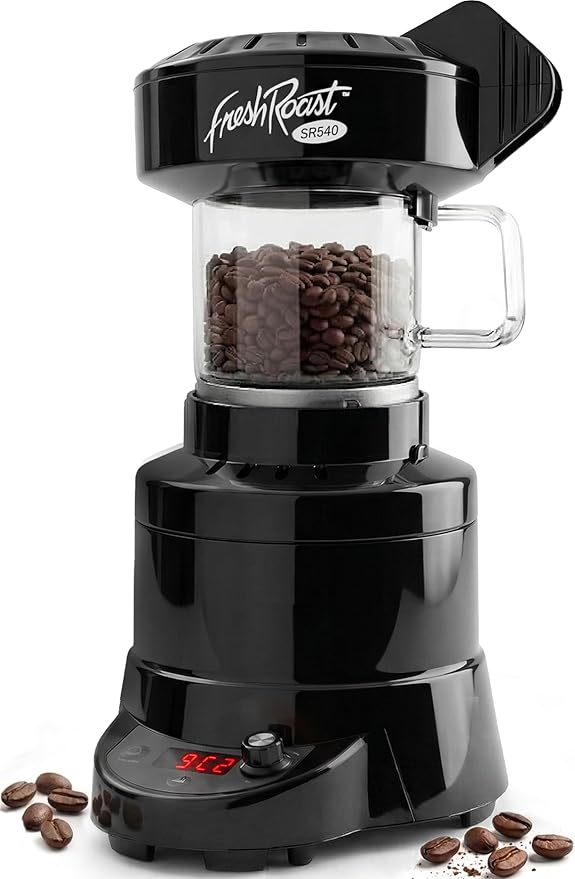
Home Coffee Roaster
Fresh Roast SR540 Coffee Roaster
~$219Buy
Digital Kitchen Scale
Greater Goods Coffee Scale with Timer
~$30Buy
Heat-Resistant Gloves
Artisan Griller BBQ Heat Resistant Gloves
~$30Buy
Timer
ThermoPro TM02 Dual Digital Kitchen Timer
~$28Buy
Related hobbies
If Coffee Roasting appeals, these share its shape — same kind of pull, different craft.


Frequently asked questions
How much does it cost to start Coffee Roasting?
A solid starter setup for Coffee Roasting runs about $337 based on our curated picks — that covers the essentials without over-buying. Real spend varies by brand, condition (new vs. used), and what you already own. See the Tools & gear tab for the full itemised list with current pricing.
Is Coffee Roasting hard to learn?
Coffee Roasting has a genuine learning curve — expect months of regular practice before things feel natural. Early sessions can feel clunky, but that's normal. Most people find the progress itself motivating: there is always a clear next thing to improve. Starting with a structured lesson or class rather than self-teaching makes a meaningful difference in how fast you progress.
What do you actually need to start Coffee Roasting?
The Tools & gear tab on this profile lists the recommended starter pick per category with prices and direct links. For a first session, focus on the Essential items only — add the Optional upgrades later if you stick with it. Many beginners borrow or rent before buying anything.
Can you do Coffee Roasting completely on your own?
Yes — Coffee Roasting is well-suited to solo practice. Most people do it on their own schedule without needing partners, clubs, or group sessions. That makes it easy to fit into a busy week, and your progress is not dependent on others showing up. Community is available if you want it, but it is entirely optional.
Can you try Coffee Roasting before committing to it?
Strongly recommended. Look for intro classes, club open days, or single-session rentals — most areas have options. Many gear shops let you demo or rent equipment for a day. Starting with a low-commitment first session before buying anything is the standard advice from people already in the hobby: it tells you whether you actually enjoy it, not just whether you think you will.