
Baking
Ideal for those who follow instructions to the letter, enjoying the exactness..
0 usersCommunity fit
You end up with a memory worth keeping.
Wondering if Baking is your kind of thing?
See your match — 2-min quizThe smell of bread filling the kitchen is the whole reason, but getting there means weighing flour to the gram and learning that humidity, your oven's hot spots, and five extra minutes all matter.
The first month is dense loaves and pale, sad cookies.
Then a crust cracks the right way and the crumb opens up, and you understand why people get obsessive about something as simple as flour, butter, and heat.
Is this for you?
Honest tradeoffs before you spend money or clear space.
You'll enjoy this if
- Weighing flour to the gram feels satisfying, not fussy.
- Want the smell of fresh bread to be the payoff.
- Happily learn your oven's hot spots by feel.
Not for you if
- Dense loaves and pale cookies for a month would crush you.
- Scoop ingredients and refuse to own a scale.
- Want a snack now, not a dough that proves overnight.
Tends to suitThe Cultivator
What to expect
Rough shape of the first few months — not a promise, a mental model.
- first session
Your first loaf comes out dense and gummy in the middle, or your cookies spread flat and pale — and you realize the recipe's "bake until golden" assumes an oven that behaves nothing like yours. You eat it anyway.
- first month
You start weighing ingredients instead of scooping, and things stop failing randomly. The first time a crust cracks when you tap it and the crumb opens up in clean holes, you understand what you were chasing.
- few months in
You know your oven's hot spots by feel, adjust hydration when the dough feels wrong, and can tell by the windowpane test whether the gluten is ready. You're baking to your palate now, not the recipe's.
What people say
The fastest payoff of any craft, you get something delicious in an afternoon. Baking is unforgiving about measuring though, it's chemistry, so eyeballing amounts like you would in cooking will bite you.
Tip: Buy a cheap kitchen scale and weigh everything. It's the single biggest jump in consistency.
Just started · HobbyStackLovely and rewarding and you become very popular with friends. The flip side is it's easy to eat your output, and bread especially is a patience game with proving times you can't rush.
Tip: Start with a no knead bread or simple cookies. Build confidence before tackling laminated pastry.
A few months in · HobbyStackStill delights me, and there's always a harder thing to attempt, croissants will keep you humble. It does fill your kitchen and your waistline if you're not giving things away.
Tip: Read the whole recipe before you start. Baking punishes the surprise 'rest overnight' step.
Years in · HobbyStack
Baking guides
Baking for Beginners: Your First Bakes and the Tools That Matter
Baking has a reputation for being fussy and unforgiving. It's actually the most reliable craft in the kitchen — it runs on a handful of chemical reactions that do the same thing every time. Get three cheap things right and your bakes work almost every time. Here's where to start, what to bake first, and the one skill that fixes most failures.
Sourdough Bread for Beginners: A Complete Getting-Started Guide
Sourdough seems complicated until you understand what is actually happening. You are cultivating wild yeast, then using it to leaven bread. Everything else — the schedules, the ratios, the scoring — is in service of that simple process. Here is how to start without getting lost in the rabbit hole.
From the blog
- Hobbies to Do at Home: 25 Activities for Your Own Space
- Cheap Hobbies: 17 You Can Start for Under $30
- Dopamine Hobbies: 15 That Reset Your Brain (Without a Screen)
- 18 Fun Hobbies to Try When You're Bored
- Hobbies for ADHD: 13 Activities That Match How Your Brain Works
- Hobbies for Adults Who've Never Really Had One: 14 Easy On-Ramps
- Hobbies for Introverts: 16 Solo Activities That Actually Recharge You
- Hobbies for Kids: 15 Screen-Free Ideas That Actually Stick
- Hobbies You Can Do With Your Hands: 18 Crafts to Get You Off a Screen
- Indoor Hobbies for Adults: 18 Things to Do When You're Stuck Inside
- The Ultimate List of Hobbies: 200+ Ideas Sorted by Type
- Productive Hobbies: 14 Activities That Actually Leave You With Something
- Hobbies That Make Money: 10 That Can Actually Pay You Back
- Weekend Hobbies: 16 You Can Start (and Finish) by Sunday
- Winter Hobbies: 20 Activities to Pick Up When It Gets Cold
- Creative Hobbies Worth Starting (Even If You're Not "An Artist")
- Hobbies to Start in Your 30s (The Best Time to Actually Begin)
- Productive Hobbies: Activities That Build Something Real
- 7 Signs You've Found the Right Hobby
Projects to get you started
Real things to make, beginner to advanced. Start with whatever appeals — nothing's locked, no set order.
Beginner
3 projectsIntermediate
2 projectsAdvanced
2 projectsThe full kit
The essentials run about $284 — you don't need it all to start: each project above lists only what it uses, and the first is often free. Links open Amazon (affiliate tag).
Digital Kitchen Scale
OXO Good Grips Stainless Steel Food Scale with Pull-Out Display
~$60Buy

Measuring Cups and Spoons Set
Stainless Steel Measuring Cups and Spoons
~$16Buy
Mixing Bowls
OXO Good Grips 3-Piece Stainless Steel Mixing Bowl Set
~$60Buy

Whisk
Basic Handle Balloon Whisk
~$7Buy

Rubber Spatula
Heat-Resistant Silicone Spatula
~$9Buy
Baking Sheet
USA Pan Bakeware Half Sheet Pan
~$28Buy
Round Cake Pans
USA Pan 9-Inch Round Layer Cake Pan (Set of 2)
~$38Buy
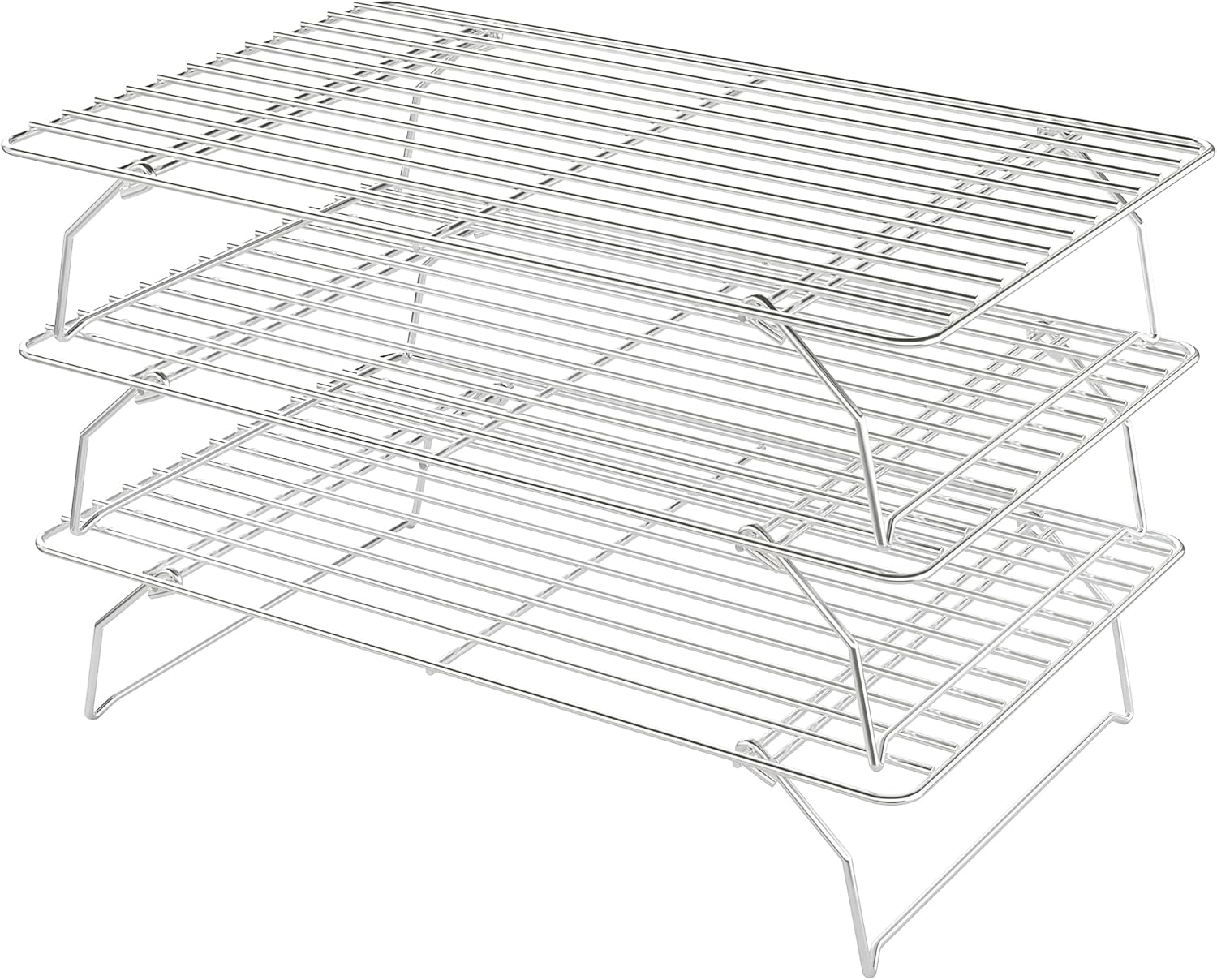
Cooling Rack
Stackable Cooling Rack Set
~$17Buy
Oven Thermometer
ThermoWorks DOT Simple Alarm Thermometer
~$49Buy
Related hobbies
If Baking appeals, these share its shape — same kind of pull, different craft.


Frequently asked questions
How much does it cost to start Baking?
A solid starter setup for Baking runs about $284 based on our curated picks — that covers the essentials without over-buying. Real spend varies by brand, condition (new vs. used), and what you already own. See the Tools & gear tab for the full itemised list with current pricing.
Is Baking hard to learn?
Baking is learnable with the right approach. The first few sessions usually feel awkward, then something clicks. A structured intro — a class, a workshop, or a guided first project — gets you past the frustrating early stage faster than figuring it out alone.
What do you actually need to start Baking?
The Tools & gear tab on this profile lists the recommended starter pick per category with prices and direct links. For a first session, focus on the Essential items only — add the Optional upgrades later if you stick with it. Many beginners borrow or rent before buying anything.
Can you do Baking completely on your own?
Yes — Baking is well-suited to solo practice. Most people do it on their own schedule without needing partners, clubs, or group sessions. That makes it easy to fit into a busy week, and your progress is not dependent on others showing up. Community is available if you want it, but it is entirely optional.
Can you try Baking before committing to it?
Strongly recommended. Look for intro classes, club open days, or single-session rentals — most areas have options. Many gear shops let you demo or rent equipment for a day. Starting with a low-commitment first session before buying anything is the standard advice from people already in the hobby: it tells you whether you actually enjoy it, not just whether you think you will.