Best Beginner Home Coffee Roaster 2026: Nuvo vs Fresh Roast SR540 vs Behmor 1600
Home roasting is one of those rare hobbies where the result is measurably better than what you can buy. Get the right roaster and you'll drink the best coffee of your life within a month.
HobbyStack may earn a commission from links on this page at no extra cost to you. Our picks are chosen on merit; the commission helps fund the research.
- Home roasting is one of those rare hobbies where the result is measurably better than what you can buy. A week-old home-roasted bean tastes alive in a way grocery-store coffee never does.
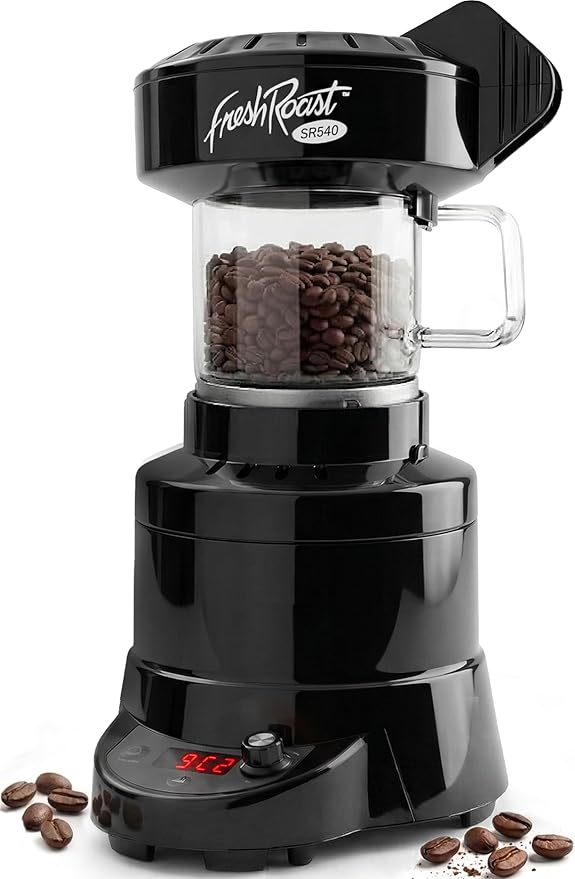
- Our pick: the Fresh Roast SR540 (~$240). The 2026 consensus beginner electric roaster across Sweet Maria's, Coffee Chronicler, and Roastmasters. Fluid bed (air) design lets you see the beans change color through clear glass. 4 oz batches.
- Budget entry: the Nuvo Eco Ceramic Stovetop Roaster (~$40). Manual ceramic stovetop roaster. Sub-$40 way to learn the craft hands-on before investing in electric.
- Going deep: the Behmor 1600 Plus (~$450). Drum roaster, 1 lb batches (4x the Fresh Roast), multiple roast profiles. The roaster home roasters upgrade to when 4 oz at a time isn't enough.
- Skip: oven roasting (uneven results, fills the house with smoke); air popcorn poppers (technically work but lack temperature control); 'turkey fryer' modified rigs (DIY territory).


Why home-roasted coffee is genuinely better
Coffee is roasted differently from most foods: it tastes best 3-14 days after roasting, then declines steadily. Grocery store beans roasted weeks or months ago are flat — most of the volatile aromatics have evaporated. Fresh-roasted coffee from your kitchen at peak (day 3-7) tastes like a different drink.
This is the rare hobby where the result really is better than what you can buy. Specialty roasters know this, which is why third-wave coffee shops emphasize roast date on their bags. But shipping coffee always introduces a 3-14 day delay between roast and brew. Roasting at home eliminates that delay.
Home roasting has two main approaches:
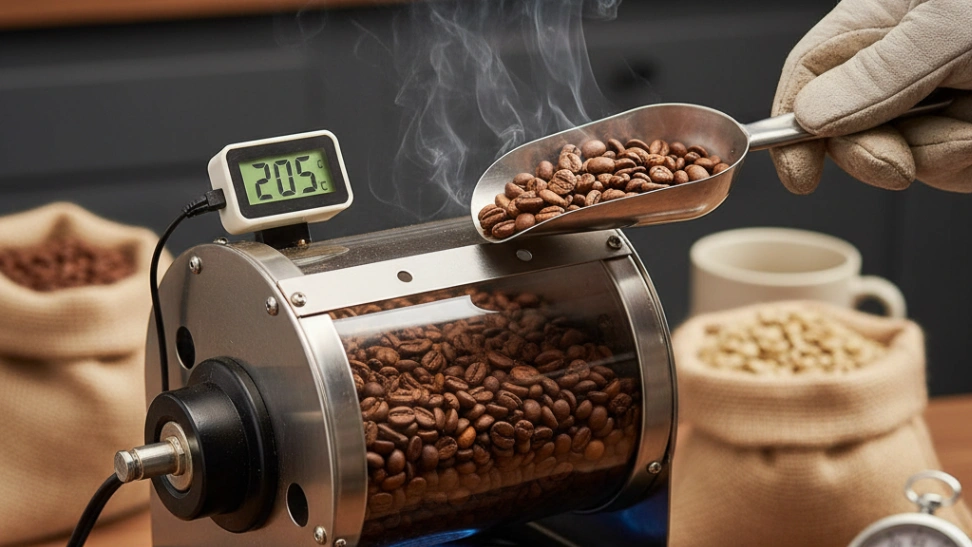
Fluid bed (air) roasters push hot air through the beans, agitating them while they roast. Visual feedback through the glass chamber, fast roasts (~10 minutes), small batches. Best for beginners learning what each roast stage looks like.
Drum roasters rotate beans in a drum over a heat source. No visual feedback (you go by sound and smell), larger batches, longer roasts (~15-20 minutes). Better for production once you know what you're doing.
The single biggest beginner trap: trying to skip the roasting hobby by buying gimmicky tabletop "automatic" roasters that claim 5-minute setup. They produce mediocre roasts because they can't be adjusted, and they break within 1-2 years. Real coffee roasting requires real equipment that lets you control time, temperature, and airflow.
 Best for most beginners
Fresh Roast SR540 Coffee Roaster
$219The Fresh Roast SR540 is the 2026 consensus beginner electric roaster. Sweet Maria's (the trusted green coffee bean importer) recommends it more often than any other roaster for first-time buyers. The fluid bed (air) design has clear glass walls that let you watch the beans change color through the roast — invaluable for learning what first crack, second crack, and city roast look like. Variable controls for time, temperature, and fan speed give you real adjustment range. 4 oz green bean batches roast in 8-12 minutes. Forgiving for beginners; flexible enough to stay useful as you develop your palate and start chasing specific roast profiles. The roaster that lasts your first 2-3 years before you decide to upgrade.
What's good
- Variable controls for time, temperature, AND fan speed — full beginner-friendly adjustment
- Clear glass walls let you visually identify first crack, color changes, roast stages
- Forgiving design — hard to ruin a roast with this machine
- Sweet Maria's #1 recommendation for first-time home roasters
- Strong used market — sells $130-170 used if you upgrade
What's not
- 4 oz batches per roast = ~half a pound of finished roasted coffee per session
- Loud fan during roasting (similar to a hair dryer)
- Best for light-to-medium roasts; dark roasts can be finicky
 Best under $50
Nuvo Eco Ceramic Handy Coffee Bean Roaster
$30The Nuvo Eco Ceramic Stovetop Roaster is the lowest-budget entry to home roasting that's still real. You hold the ceramic vessel over a gas stove flame and rotate it by hand for 5-10 minutes; you can see and hear the beans transform. ~50g (1.7 oz) batches per roast. Not a replacement for an electric roaster — it's slow, batches are tiny, and you're holding a hot ceramic pot for 5 minutes. But it's the absolute lowest-friction way to learn the craft hands-on before committing to a $240-450 electric roaster. Many home roasters keep their Nuvo even after upgrading, for travel and small-batch experiments.
What's good
- Sub-$50 way to learn the craft hands-on
- Forces you to learn first crack by sound and smell (foundational skill)
- Tiny batches let you experiment with multiple bean varieties cheaply
- Portable — travel with it, roast at someone else's house
- Holds value — ceramic doesn't degrade
What's not
- 50g batches mean roasting daily for 2-3 cups (not a 'restock my coffee jar' machine)
- You're holding a hot ceramic vessel over open flame for 5-10 minutes
- Requires a gas stove (electric stoves don't generate enough heat)
- Inconsistent roasts until you build hand-eye-ear muscle memory
 Best for serious home roasters
Behmor 1600 Plus Coffee Roaster
$450The Behmor 1600 Plus is the home-roaster upgrade for someone who's outgrown the Fresh Roast's 4 oz batches. Drum roaster design (rotating drum heats beans evenly), 1 lb green bean capacity per roast (4x the Fresh Roast — enough for 1-2 weeks of coffee per session), pre-programmed roast profiles, and smoke suppression that makes indoor roasting more practical. Known limitations to be aware of: aggressive auto-shutoff that triggers near second crack can frustrate dark-roast attempts (manageable once you understand it). The roaster home roasters upgrade to once they're committed.
What's good
- 1 lb batch capacity — roast a week of coffee in one session
- Drum roasting produces fuller body and slightly different flavor profile vs air roasting
- Pre-programmed profiles plus full manual mode for learning
- Smoke suppression makes indoor roasting more practical
- Real Behmor brand support and parts availability
What's not
- $450 is real money for a hobby roaster
- Aggressive auto-shutoff near second crack — frustrating for dark roasts until you learn workarounds
- Drum design has no visual feedback — judge by sound, smell, and time
- Bigger footprint than fluid-bed roasters — needs counter or shelf space
All three roasters need green (unroasted) coffee beans, which most grocery stores don't sell. The trusted US sources: Sweet Maria's (the home-roaster reference, ships from Oakland, exceptional bean selection and education); Burman Coffee Traders (great selection, fast shipping); and Happy Mug Coffee (good prices). Avoid Amazon green coffee — variable quality, often stale, sometimes mislabeled. Sweet Maria's also runs the best home-roasting educational content on the internet — start there.
How to choose between the three
Pick the Fresh Roast SR540 if you're serious about learning home roasting but don't want to spend $450. The visual feedback (you can see the beans change color) teaches you what each roast stage looks like — invaluable for building the intuition that makes you a good roaster.
Pick the Nuvo Eco if you want to try home roasting before spending $240. Real craft, real learning, sub-$50. Many home roasters keep theirs as a backup forever.
Pick the Behmor 1600 Plus if you've already done 50+ roasts and want bigger batches. The 1 lb capacity transforms home roasting from "daily ritual" to "weekly project" — different rhythm. Not the right first roaster unless you're certain you'll commit.
What's the same across all three: real home-roasting equipment from established brands with real customer support. The differences that matter: batch size (Behmor > Fresh Roast > Nuvo), automation (Fresh Roast > Behmor > Nuvo), and price.
Whichever you pick: get a kitchen scale ($30) and an infrared thermometer ($20) at the same time. Roasting is about controlling bean mass and temperature. Without measurement, you can't reproduce a good roast or improve a bad one.
Before you buy
Buy green beans from Sweet Maria's first. $30-50 for a sampler covers 4-6 different origins. Roasting beans you'll actually want to drink matters; bad green coffee can't be saved by good roasting.
Plan to roast outside or in your garage. Even the Behmor with smoke suppression produces noticeable coffee-roasting smell during second crack. Most home roasters set up on a porch, garage, or outdoor counter.
Keep a roast log. Date, bean origin, weight in, target end-temperature, total time, time at first crack. After 20 roasts you'll see patterns and start improving systematically. After 100 roasts you'll have your personal flavor preferences mapped.
Get a fan + colander cooling setup ($20 DIY). Beans need to cool quickly after roasting to stop development. A $20 box fan plus a metal colander works perfectly; the dedicated 'cooling trays' sold separately are usually overkill.
Don't drink the coffee for 24 hours after roasting. Fresh beans need to off-gas CO2 before they brew well. The flavor opens up at 24-48 hours and peaks at day 3-7. Roast on Saturday for the best Monday morning coffee.
Common questions about home coffee roasting
Can I really roast better coffee at home than what I can buy?
Fluid bed (air) vs drum roaster — which is better?
How long does home-roasted coffee stay good?
Is roasting indoors safe?
What about Kaldi Wide Range or Aillio Bullet?
How much does running a roaster cost monthly?
For most people, the Fresh Roast SR540 Coffee Roaster is the buy — the best balance of price, quality, and longevity. Want to spend less? The Nuvo Eco Ceramic Handy Coffee Bean Roaster gets you started for a fraction of the cost. Ready to go deeper? The Behmor 1600 Plus Coffee Roaster is the upgrade.
The HobbyStack editorial team researches each guide using practitioner communities, published resources, and direct input from active hobbyists. Every guide is reviewed for accuracy before publication and updated when practices change.
About our editorial process →More gear guides
Best Beginner Stand Mixer 2026: KitchenAid Artisan vs Classic vs Pro 600
Stand mixers are a one-time purchase that lasts decades. Pick the right KitchenAid (it's almost always going to be a KitchenAid) and you'll never need to think about it again. Pick wrong and you'll end up reselling and rebuying within 5 years.
Best Beginner Mirrorless Camera 2026: Canon EOS R50 vs Sony ZV-E10 II
The best beginner mirrorless camera teaches you photography, not menus. It needs reliable autofocus, a grip that makes sense, and enough image quality to reward good technique. The Canon EOS R50 with its kit lens is the right camera for most people who are just starting out. Here's why — and who should buy something different.
Best Beginner Hiking Boots 2026: Merrell Moab 3 vs Salomon X Ultra 4
Your first hiking boots need to do three things: not blister you, stay dry on wet trails, and grip technical terrain. The Merrell Moab 3 Waterproof checks all three for around $130. Here are three real boots — a non-waterproof breathable option, the waterproof all-rounder, and a stiffer upgrade for rocky terrain — each with a confirmed Amazon link.
Best Mountain Bike Knee Pads for Beginners
Once your trails get real features, knee pads are the highest-value protection you can add — knees hit the ground and the bike most often. Modern flexible pads are comfortable enough to forget you’re wearing them. Here are three, how we chose them, and what to expect.
Best Hydration Packs for Mountain Biking
Once rides get longer than a quick loop, you need water you can drink without stopping — plus room for a spare tube, tools, and a snack. A hydration pack carries it all hands-free. Here are three, how we chose them, and what to expect.
Best Mountain Bike Gloves for Beginners
Gloves are the cheapest, most useful thing to add after a helmet: better grip, less vibration, and saved skin when (not if) you go down. Full-finger, always, for trail riding. Here are three worth pulling on, how we chose them, and what to expect.