Best Yoga Mat for Beginners 2026: Gaiam vs JadeYoga vs Manduka
The only thing that really matters in a beginner yoga mat is grip — a mat that slides turns downward dog into a battle. Thickness and material are the next decisions. Here are three mats that nail it, from an inexpensive Gaiam to a buy-it-for-life Manduka.
HobbyStack may earn a commission from links on this page at no extra cost to you. Our picks are chosen on merit; the commission helps fund the research.
- Grip is everything. A mat that slides when your hands sweat makes every pose harder; prioritise grip over price, looks, or thickness.
- Our pick: the JadeYoga Harmony (~$90). Natural-rubber, teacher-favourite grip that only gets better as you sweat, in a comfortable everyday thickness.
- Budget: the Gaiam Premium 6mm (~$25). Cushioned and non-slip enough for beginners — the cheapest way to start without a slippery dollar-store mat.
- Buy it once: the Manduka PRO (~$130). Dense, supportive, near-indestructible, with a lifetime guarantee — the last mat many yogis buy.
- Match thickness to use: ~4–5mm for stability in standing poses, thicker (6mm) for cushioning sensitive joints — but too thick hurts balance.


Grip, thickness, and material — what actually matters
Three things define a yoga mat, and they're not equally important. Grip is #1 by a mile — a mat that slides when your palms sweat makes downward dog and every standing pose a fight, and quietly puts beginners off yoga entirely. Thickness is a trade-off: thinner (4–5mm) gives a stable, connected feel that's better for balance; thicker (6mm+) cushions knees and joints but makes balance poses wobblier. Material drives grip and feel: cheap PVC foam is fine to start, TPE is a lighter eco option, and natural rubber (like JadeYoga) grips best of all but has a faint initial smell and isn't for latex allergies. Buy for grip first, thickness second, looks last.
How we picked
We weighted grip most heavily — wet and dry — because it's what makes a mat usable. Then cushion-vs-stability balance (enough padding without turning balance poses into a wobble), durability (a mat you keep vs one that flakes apart), material and feel, and value. The three picks span the honest range: a cheap-but-real starter, the grippy natural-rubber sweet spot, and the dense lifetime mat.
 Best for most beginners
JadeYoga Harmony Mat
$90The mat most people settle on once they've fought a slippery one. The JadeYoga Harmony's open-cell natural rubber gives a grip that's outstanding dry and actually *improves* as you sweat — the exact opposite of cheap slick mats — while its ~5mm cushion balances comfort with the stability you need for standing and balance poses. It's PVC-free natural rubber (JadeYoga also plants a tree for every mat sold), and it's a long-running favourite of teachers and studios for good reason. The everyday sweet spot.
What's good
- Outstanding natural-rubber grip, wet or dry
- Comfortable ~5mm cushion without sacrificing stability
- PVC-free natural materials
- Teacher- and studio-favourite
- A tree planted per mat
What's not
- Natural rubber has a faint smell at first (fades)
- Heavier than foam travel mats
- Not for anyone with a latex allergy
 Best under $30
Gaiam Premium Reversible Mat (6mm)
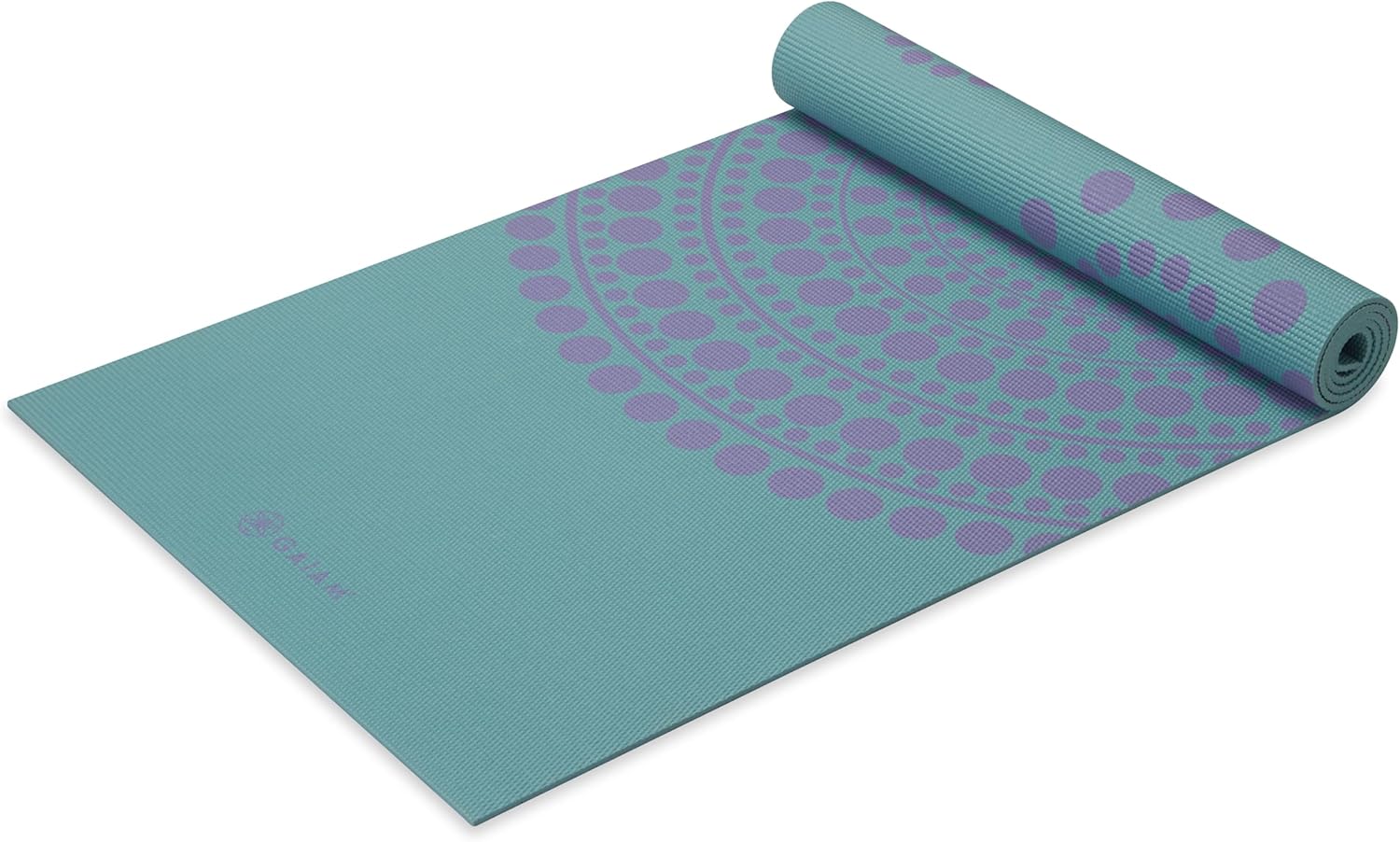
$25Proof you don't need to spend much to start well. For around $25, the Gaiam Premium gives you a 6mm cushion that's kind to knees and joints, a textured surface that's non-slip enough for beginner flows, and reversible prints if you like options. It won't grip like natural rubber once you're sweating hard, and the PVC-foam build won't last like premium mats — but it's a world away from a slippery dollar-store mat, and plenty to build a real practice on while you decide how far you'll take yoga.
What's good
- Inexpensive way to start with a real, non-slip mat
- 6mm cushion is comfortable for knees and joints
- Textured, reversible surface
- Widely available in many designs
What's not
- Grip fades vs natural rubber as you sweat heavily
- Foam/PVC build won't last like premium mats
- 6mm can feel slightly unstable in balance poses
 Buy it once
Manduka PRO Mat
$130The last mat many yogis ever buy. The Manduka PRO is famous for two things: dense, closed-cell cushioning that's genuinely supportive and never packs down flat, and near-indestructible construction backed by a lifetime guarantee — these mats routinely last decades. The one quirk for beginners is that the closed-cell surface needs a short break-in period to reach full grip (a salt scrub helps, or just use a yoga towel at first); once broken in, it's superb and hygienic, since the sealed surface won't soak up sweat or bacteria. Premium, heavy, and worth it if you know you'll stick with yoga.
What's good
- Extremely dense, supportive cushion that doesn't pack down
- Near-indestructible; lifetime guarantee
- Closed-cell surface won't absorb sweat or bacteria
- The genuine buy-it-for-life option
What's not
- Needs a break-in period (or a towel) for full grip
- Heavy — not a travel mat
- Premium price
If you take one thing from this: choose grip over price, colour, or thickness. A sliding mat makes downward dog and every standing pose a struggle and quietly puts beginners off yoga. If a cheaper mat slips once you warm up, a cotton yoga towel laid over it is a cheap fix while you save for a grippier one.
Before you buy
Prioritise grip — it's the difference between a mat you trust and one you fight.
~4–5mm is the sweet spot; go thicker only for sensitive knees, and know thick mats reduce balance-pose stability.
Natural rubber grips best but smells faintly at first and isn't for latex allergies; closed-cell PVC (Manduka) needs a break-in.
Wipe your mat down regularly; natural-rubber mats prefer a damp cloth over harsh cleaners.
A cotton yoga towel rescues a slippery mat and is worth having for hot or sweaty practice anyway.
Common questions about beginner yoga mats
What's the most important thing in a yoga mat?
How thick should a beginner mat be?
PVC, TPE, or natural rubber?
Why is my new mat slippery?
Is the Manduka PRO worth it for a beginner?
How do I clean and care for a yoga mat?
For most beginners the JadeYoga Harmony is the buy — natural-rubber grip that gets better as you sweat. On a budget, the Gaiam Premium 6mm is a fine, cushioned start for ~$25. Want the last mat you'll buy? The Manduka PRO lasts decades. Whatever you pick, choose grip first.
The HobbyStack editorial team researches each guide using practitioner communities, published resources, and direct input from active hobbyists. Every guide is reviewed for accuracy before publication and updated when practices change.
About our editorial process →More gear guides
Best Beginner Mirrorless Camera 2026: Canon EOS R50 vs Sony ZV-E10 II
The best beginner mirrorless camera teaches you photography, not menus. It needs reliable autofocus, a grip that makes sense, and enough image quality to reward good technique. The Canon EOS R50 with its kit lens is the right camera for most people who are just starting out. Here's why — and who should buy something different.
Best Beginner Hiking Boots 2026: Merrell Moab 3 vs Salomon X Ultra 4
Your first hiking boots need to do three things: not blister you, stay dry on wet trails, and grip technical terrain. The Merrell Moab 3 Waterproof checks all three for around $130. Here are three real boots — a non-waterproof breathable option, the waterproof all-rounder, and a stiffer upgrade for rocky terrain — each with a confirmed Amazon link.
Best Mountain Bike Knee Pads for Beginners
Once your trails get real features, knee pads are the highest-value protection you can add — knees hit the ground and the bike most often. Modern flexible pads are comfortable enough to forget you’re wearing them. Here are three, how we chose them, and what to expect.
Best Hydration Packs for Mountain Biking
Once rides get longer than a quick loop, you need water you can drink without stopping — plus room for a spare tube, tools, and a snack. A hydration pack carries it all hands-free. Here are three, how we chose them, and what to expect.
Best Mountain Bike Gloves for Beginners
Gloves are the cheapest, most useful thing to add after a helmet: better grip, less vibration, and saved skin when (not if) you go down. Full-finger, always, for trail riding. Here are three worth pulling on, how we chose them, and what to expect.
Best Golf Rangefinders for Beginners
A rangefinder gives you the exact yardage to the flag, which speeds up play and sharpens your club selection once you know your distances. It’s a luxury, not a necessity — but a good-value one delivers most of a premium model’s usefulness. Here are three, how we chose them, and what to expect.