Best Pottery Wheel for Beginners 2026: From a $120 VEVOR to a Speedball
A home pottery wheel has gone from a $1,000 commitment to something you can try for around $120 — the budget 25cm wheels are genuinely usable for learning to throw. Here's what those cheap wheels do and don't do, what the upgrades buy you, and when a real brand like Speedball is worth it.
HobbyStack may earn a commission from links on this page at no extra cost to you. Our picks are chosen on merit; the commission helps fund the research.
- Budget 25cm wheels (VEVOR / SKYTOU / Mophorn are the same machine rebranded) are genuinely usable for learning — ~$120 gets you throwing.
- Our pick: a 25cm wheel with an LCD + tools bundle (~$170). The included trimming tools and finer speed control make the first months smoother.
- Cheapest start: a basic 25cm 350W wheel (~$120) — bare-bones, but it spins true enough to learn centering and pulling.
- Buy it once: a Speedball Artista (~$550). A real US pottery brand — quieter, smoother, more reliable, with the support and longevity the cheap wheels lack.
- A wheel is only half the setup — you'll also need clay, basic tools, and a way to fire your pots (usually a community studio or class).

What the cheap wheels can (and can't) do
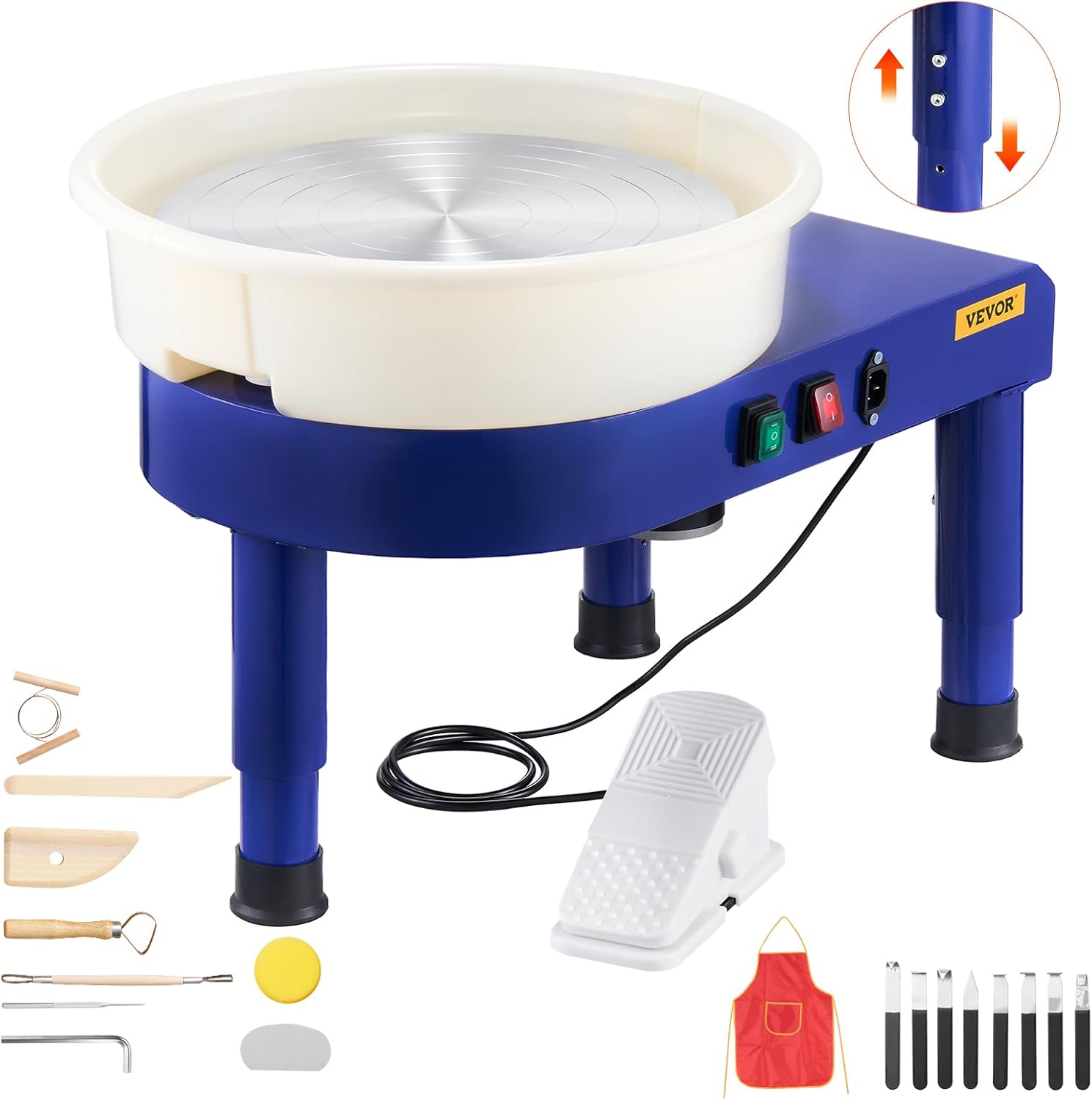
The flood of ~$120 "25cm / 350W" wheels on Amazon (VEVOR, SKYTOU, Mophorn and others are largely the same machine with different badges) genuinely changed beginner pottery — you no longer need a $1,000 studio wheel to learn. For learning the fundamentals (centering, opening, pulling walls) on small-to-medium pots, they spin true enough and have a foot pedal and a removable basin. What they can't do is shrug off big or very stiff clay (the motor bogs down), run quietly, or last like a real wheel — and there's little manufacturer support. For finding out whether throwing is for you, that trade is well worth it.
How we picked
We weighted these on what matters at the wheel: smooth, true rotation (wobble ruins centering), torque (so the wheel doesn't stall under your hands), speed control and a foot pedal (hands-free, with reverse), a usable basin and easy cleanup, and longevity and support. The honest reality of this category: the budget and mid options are the same import platform differentiated by features, while a real brand like Speedball is the jump in refinement and durability.
 Best for most beginners
VEVOR 25cm Pottery Wheel (LCD + 18-pc tool kit)
$170The sensible beginner buy. It's built on the same 25cm/350W platform as the cheap wheels, but the additions are exactly the ones a beginner benefits from: an LCD readout and finer 0–300 RPM control for smoother starts, a foot pedal with reverse, and — the real value — an 18-piece trimming and sculpting tool kit included, which you'd otherwise spend $20–30 buying separately. It's enough wheel to learn centering and pulling properly, and it arrives with everything you need to actually finish a pot.
What's good
- Includes an 18-piece trimming/sculpting tool kit
- LCD readout + finer speed control than the bare wheel
- 350W handles small-to-medium pots
- Foot pedal frees both hands; reversible direction
- Detachable basin for easy cleanup
What's not
- Same import build as other 25cm wheels — not a lifetime tool
- Motor strains on large or very stiff clay
- Limited manufacturer support vs a real brand
 Best under $150
SKYTOU 25cm Pottery Wheel (350W)
$120The cheapest honest way into throwing. The SKYTOU is the no-frills version of the standard 25cm/350W beginner wheel, and for ~$120 it does the essential job: it spins true enough to learn centering, opening, and pulling walls on small-to-medium pots, with a foot pedal for hands-free speed and a removable basin for cleanup. You'll need to buy trimming tools separately, the motor bogs down on big or stiff clay, and it's noisier and less refined than a brand wheel — but as a way to find out whether the wheel is for you, it's remarkable value.
What's good
- Cheapest real wheel — ~$120 to start throwing
- Spins true enough to learn centering and pulling
- Foot pedal and removable basin included
- Compact enough for a garage or balcony
What's not
- No tools included — budget for trimming tools
- Motor bogs down on big or stiff clay
- Noisier and less refined than a brand wheel
- Minimal build quality and support
 Buy it once
Speedball Artista Pottery Wheel
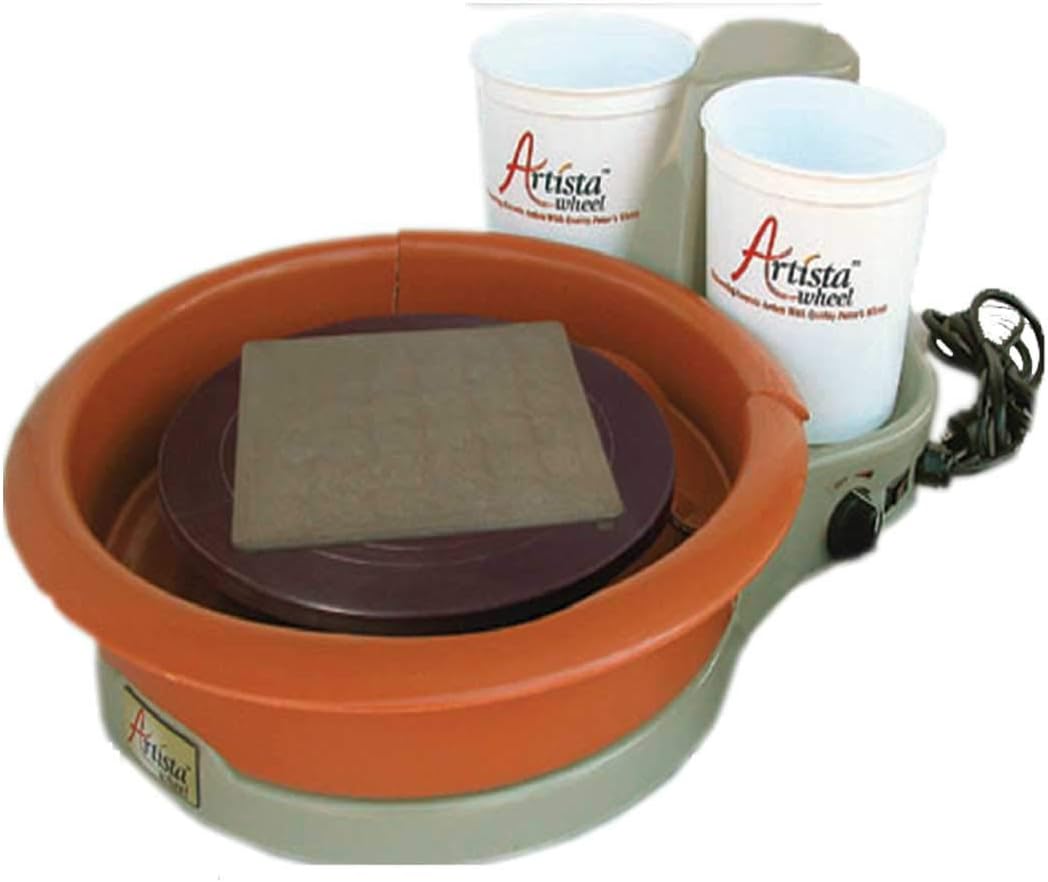
$550The wheel you buy if you already know you're in. Speedball is the best-known US pottery brand, and the compact Artista shows what that buys: a quiet 1/3 HP motor that holds speed under your hands, an 11-inch wheel head with 25 lb centering capacity, variable-speed hand control, and a two-part splash pan — noticeably quieter, smoother, and more reliable than the import wheels, and built to last for years with real support behind it. It's a portable, compact wheel (lower capacity than full studio wheels, and it uses a hand control rather than a foot pedal), and at ~$550 it's several times a budget wheel — but for a committed beginner tired of fighting a noisy, bog-prone import, it's the wheel that lasts.
What's good
- Speedball — a real US pottery brand with support and longevity
- Quiet 1/3 HP motor, smooth and stable under load
- 11" wheel head, 25 lb centering capacity
- Two-part splash pan and variable-speed control
- Portable, compact, and built to last for years
What's not
- Several times the price of a budget import wheel
- Compact — lower capacity than full-size studio wheels
- Hand-control speed in the base kit (no foot pedal)
A wheel only gets you to a wet, shaped pot. To finish it you need bisque and glaze firing in a kiln — and most beginners use a community studio, a local college, or a pottery cafe for firing rather than buying a kiln. Sort out firing access before you fill your shelves with unfired greenware.
Before you buy
A 25cm wheel head and ~350W is plenty for beginner pots — don't overpay for size and power you won't use early.
Make sure the wheel has a foot pedal (hands-free speed) and a reverse direction option.
Budget separately for clay and trimming tools — the bare budget wheel includes none.
Set it up somewhere you can get genuinely messy and hose down; throwing is gloriously muddy.
Sort out kiln/firing access (a community studio or class) before committing to a wheel at home.
Common questions about beginner pottery wheels
Are the cheap 25cm wheels actually any good?
VEVOR vs SKYTOU vs Mophorn — what's the difference?
How powerful does a beginner wheel need to be?
Do I need a kiln too?
Is a Speedball Artista worth 4x the price?
What else do I need besides the wheel?
For most beginners a 25cm wheel with the tools bundle is the buy — enough wheel to learn on, with the trimming tools included. Just testing? A basic 25cm wheel throws for ~$120. Committed for the long haul? A Speedball Artista is quieter, smoother, and built to last. Sort out firing access either way.
The HobbyStack editorial team researches each guide using practitioner communities, published resources, and direct input from active hobbyists. Every guide is reviewed for accuracy before publication and updated when practices change.
About our editorial process →More gear guides
Best Cordless Drill for Woodworking 2026: Ryobi vs DeWalt vs Milwaukee
A cordless drill is the first power tool most woodworkers buy — it drives screws, bores pilot holes for joinery, and assembles your projects. The trick is choosing the right one for a wood shop without overbuying. Here are three picks, and the battery-ecosystem decision that matters more than the drill itself.
Best Hand Saw for Woodworking 2026: Japanese Pull Saw vs Western
A good hand saw is the most-used tool in beginner woodworking, and the first decision is the stroke: Japanese pull saws cut on the pull (thin kerf, easy control) while Western saws cut on the push (faster through rough stock). Here are three picks and which stroke fits the work you'll actually do.
Best Miter Saw for Woodworking 2026: Metabo vs DeWalt DWS779 vs Festool Kapex
A miter saw makes the fast, accurate, repeatable crosscuts that turn rough boards into furniture parts — the second power tool most woodworkers buy after the drill. Here are three picks, from an honest sub-$160 starter to the finish-carpenter's dream, plus how much saw your woodworking actually needs.
Best Beginner Woodworking Chisels 2026: REXBETI vs Irwin Marples vs Narex
A set of bench chisels is one of the first hand tools every woodworker needs — they pare joints, clean up saw cuts, and do the detail work a saw can't. Here are three beginner picks you can buy on Amazon, from a cheap set that includes its own sharpening stone to a buy-it-once Czech set, plus the four sizes you actually need.
Best Beginner Anvil 2026: 3 Honest Picks for New Blacksmiths
You'll spend a lot of years on whatever anvil you buy. Skip the Amazon cast-iron traps — here are the three anvils worth buying as a beginner, ranked by what you actually get for your money. Plus the one we won't pretend is on Amazon.
Best Beginner Blacksmith Hammer 2026: Picard vs Nordic Forge vs Estwing
After the anvil, the hammer is the tool you'll hold every second you forge — so its balance and feel matter more than almost anything. A 2–3 lb cross peen or rounding hammer is the beginner standard. Here are three good picks, from a cheap-and-cheerful Estwing to a buy-it-for-life German Picard.