Best Beginner DJ Controller 2026: Pioneer DDJ-FLX4 vs Hercules Inpulse vs DDJ-FLX6
DJ controllers are the modern starting point — cheaper than turntables, more portable, and the skills transfer to club gear directly. Here are the three controllers worth buying as a beginner.
HobbyStack may earn a commission from links on this page at no extra cost to you. Our picks are chosen on merit; the commission helps fund the research.
- Skip turntables for your first setup — controllers are cheaper, more portable, and the skills you build transfer to club gear directly.
- Our pick: the Pioneer DDJ-FLX4 (~$290). The 2026 consensus best beginner controller across MusicRadar, DJ.Studio, The DJ Hookup. Club-style 2-channel layout, real Pioneer build quality, works with both rekordbox (free) and Serato DJ Lite.
- Tighter budget / learning visually: Hercules DJControl Inpulse 300 MK2 (~$240). LED light guides on the jog wheels show you when to mix — visual training wheels for beatmatching. Bundled DJUCED software includes step-by-step tutorials.
- Going pro / 4 channels: Pioneer DDJ-FLX6 (~$720). 4-channel mixing for serious set construction, full-size jog wheels (closest feel to club CDJs), performance pads. The default upgrade once you're DJing parties.
- Skip: any DJ controller under $150 (toy build quality, software lock-in to dead platforms); Numark mini-mixers (fine but the buttons don't translate to club gear); standalone all-in-one units like the Numark Mixstream Pro (great machines but ~$700+).


Why controllers beat turntables for beginners
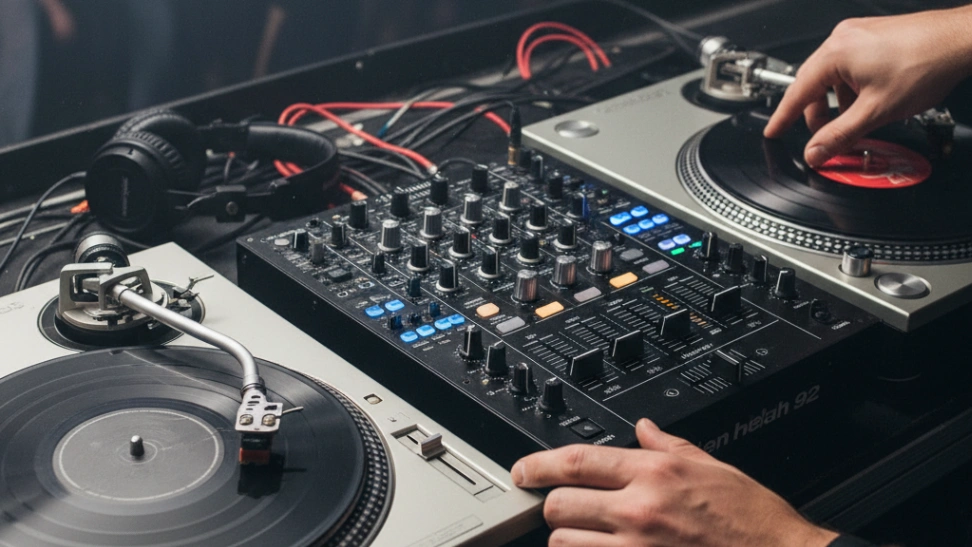
Turntable DJing is romantic. The physicality of vinyl, the pressure-of-the-moment of needle drops, the deep skill of beatmatching by ear — it's a real craft that pro DJs still respect.
For your first $300, it's also the wrong choice.
A pair of decent turntables + a 2-channel mixer + cartridges + cables runs $1,500+. Records cost $15-30 each. You're locked into vinyl-only releases, which means catalogs from before 1995 and a slim slice of modern releases. Learning to beat-match by ear takes 6-12 months of frustrating practice.
Controllers solve all of this:
- All your music is your library. Mp3, FLAC, Tidal, Beatport — everything you already own becomes DJ-ready.
- Sync button exists. Use it while you're learning beatmatching by ear; turn it off when you've internalized the rhythm. The "real DJs don't use sync" debate is settled — they do, when it makes sense.
- The skills transfer. Modern Pioneer CDJs (the club standard) use the same button layout as the DDJ-FLX4. Practice at home, walk into a club, sit down at $4,000 of CDJ gear, and your hands already know what to do.
- The math. $290 controller + Spotify subscription + free DJ software = $290 total to start. Add headphones ($60-100) and speakers ($120-200). You can be mixing your first set this weekend for $500.
The vinyl-DJ path is still there if you fall in love with the craft. But start digital.
 Best for most beginners
Pioneer DJ DDJ-FLX4 DJ Controller
$329The 2026 consensus beginner DJ controller across every major DJ publication. The DDJ-FLX4 nails three things: a club-style 2-channel layout so the skills you learn transfer directly to professional CDJ gear, dual-software compatibility (rekordbox + Serato DJ Lite both included free), and the real Pioneer build quality that the cheaper Hercules units don't quite match. The jog wheels are responsive without being twitchy, the performance pads enable real creative mixing (hot cues, samples, loops), and the integrated audio interface means you plug in headphones and speakers without buying anything else. The controller most working DJs started on.
What's good
- Club-style layout — skills transfer directly to Pioneer CDJ club gear
- Dual-software: works with rekordbox (free) AND Serato DJ Lite (free) — no software lock-in
- Real Pioneer build quality at the beginner price point
- Performance pads enable creative mixing (hot cues, loops, samples)
- Strong used-market — sells $200-230 if you upgrade
What's not
- Smaller jog wheels than premium controllers (touch-sensitive but not turntable-feel)
- No standalone mode — you need a laptop or tablet to use it
- Performance pads have fewer modes than the DDJ-FLX6 (8 vs 24)
 Best for visual learners
Hercules DJControl Inpulse 300 MK2
$243The Hercules DJControl Inpulse 300 MK2 is purpose-built for people who have never touched DJ gear. Its standout feature is the integrated light guides — LEDs on the jog wheels that visually show you exactly when to mix, helping you learn beatmatching by sight before you develop the ear for it. The bundled DJUCED software includes a built-in DJ Academy with step-by-step tutorials walking through basic transitions, EQ mixing, and effects. This is the controller for someone who wants the most beginner-friendly possible learning experience and doesn't mind that the skills don't translate one-to-one to Pioneer club gear later.
What's good
- LED light guides teach beatmatching visually — the single best beginner-learning feature in the price range
- DJUCED DJ Academy: 40+ video tutorials guide you through your first month
- Sub-$250 working DJ controller from a real brand (Hercules has been making audio gear since 1982)
- Smaller footprint than the DDJ-FLX4 — fits on a desk easily
- Genuinely the best learning experience at this price point
What's not
- Hercules layout doesn't match Pioneer CDJ club layout — some re-learning required if you transition to club gear
- DJUCED software is good but less feature-rich than Pioneer's rekordbox
- Build quality is functional, not premium — won't survive frequent gigging
- Limited used-market — harder to resell than Pioneer
 When you know you're going to gig
Pioneer DJ DDJ-FLX6 4-Channel DJ Controller
$720The DDJ-FLX6 is the 4-channel upgrade for someone certain they'll take DJing seriously. 4-channel mixing unlocks real set construction — layer a third track over a 2-track mix, drop in samples or live elements, run live remixes. The full-size jog wheels are the closest feel to club CDJs at any sub-$1,000 controller. 24 performance pad modes (vs 8 on the FLX4) unlock advanced creative mixing — beat jump, hot loops, slip mode, sequencer. The controller that takes you from bedroom DJ to small-club gigs without needing to upgrade again. Worth $720 if you can articulate why you need 4 channels and the bigger jog wheels.
What's good
- 4-channel mixing for real set-construction creativity
- Full-size 6-inch jog wheels — closest feel to club CDJs
- 24 performance pad modes (vs 8 on FLX4) — advanced creative mixing
- Loud high-quality audio output — gig-ready audio interface
- Holds value extremely well in the used market (~$500-600 used)
What's not
- $720 is real money — overkill if you'll never gig or mix more than 2 channels at a time
- Larger footprint requires real desk space — not as portable as the FLX4
- Heavier (~10 lbs) — slightly less travel-friendly than smaller units
Both Pioneer (DDJ-FLX4/FLX6) and Hercules (Inpulse 300) bundle real DJ software for free with the controller. That's $130-200 of software included. After you've used the bundled version for 3-6 months and know which software you prefer, then decide whether to upgrade to Serato DJ Pro ($130) or rekordbox Creative Plan ($220/year). Don't buy upgraded software with the controller — figure out what you actually want first.
How to choose between the three
Pick the Pioneer DDJ-FLX4 if you want the safest answer for 80% of beginners. Real Pioneer build, club-compatible layout, dual-software flexibility. The default smart beginner pick.
Pick the Hercules Inpulse 300 MK2 if you're a visual learner who's intimidated by the DJ learning curve. The LED light guides + DJUCED Academy tutorials are genuinely the best beginner-learning experience in the price range. Trade-off: the skills don't translate as directly to club gear later.
Pick the DDJ-FLX6 if you already know you'll gig, you've got the budget, and the 4-channel + bigger jog wheels matter to you. Don't buy this as a first controller unless you can clearly explain why the 2-channel FLX4 isn't enough — it usually is.
What's the same across all three: integrated audio interface (plug in headphones + speakers, ready to mix), USB-powered (no wall adapter), included DJ software, support for Spotify/Tidal/Beatport streaming. The real differences: build quality (FLX6 > FLX4 > Inpulse 300), layout transferability to club gear (FLX6 = FLX4 > Inpulse 300), and learning ergonomics (Inpulse 300 > FLX4 > FLX6).
Whichever you choose: get real over-ear headphones with isolation at the same time. AirPods or earbuds don't work for cueing — the bass mixing happens in your headphones and you need real isolation to hear it over the main speakers.
Before you buy
Download the bundled software first. rekordbox (Pioneer) and DJUCED (Hercules) are both free. Install them, load some MP3s, watch the included tutorials. Get a feel for the software before committing to hardware.
Plan for $80-200 in headphones. Audio-Technica ATH-M20x at the budget end ($55) and Sennheiser HD25 at the pro end ($200). Don't try to DJ with earbuds — the cueing won't work.
Skip standalone gear at first. All-in-one units (Numark Mixstream Pro, Pioneer XDJ-RX3) are great machines but cost $700-2500. Save for after you've learned on a controller.
Practice with public-domain tracks first. Mix-Loop on Spotify or Soundcloud has free royalty-cleared tracks for DJ practice. Don't accidentally upload your first mixtape with copyrighted music.
Used DDJ-FLX4 controllers sell for $180-230. Worth checking if budget is tight. Pioneer controllers genuinely last 5+ years of regular use.
Common questions about DJ controllers
Controller vs turntables — which should I start on?
Pioneer vs Hercules — which brand should I buy?
Do I need to buy DJ software separately?
Will my Spotify/Apple Music library work?
Can I DJ a real party with a beginner controller?
How long until I can DJ a real set?
For most people, the Pioneer DJ DDJ-FLX4 DJ Controller is the buy — the best balance of price, quality, and longevity. Want to spend less? The Hercules DJControl Inpulse 300 MK2 gets you started for a fraction of the cost. Ready to go deeper? The Pioneer DJ DDJ-FLX6 4-Channel DJ Controller is the upgrade.
The HobbyStack editorial team researches each guide using practitioner communities, published resources, and direct input from active hobbyists. Every guide is reviewed for accuracy before publication and updated when practices change.
About our editorial process →More gear guides
Best Beginner Mirrorless Camera 2026: Canon EOS R50 vs Sony ZV-E10 II
The best beginner mirrorless camera teaches you photography, not menus. It needs reliable autofocus, a grip that makes sense, and enough image quality to reward good technique. The Canon EOS R50 with its kit lens is the right camera for most people who are just starting out. Here's why — and who should buy something different.
Best Beginner Hiking Boots 2026: Merrell Moab 3 vs Salomon X Ultra 4
Your first hiking boots need to do three things: not blister you, stay dry on wet trails, and grip technical terrain. The Merrell Moab 3 Waterproof checks all three for around $130. Here are three real boots — a non-waterproof breathable option, the waterproof all-rounder, and a stiffer upgrade for rocky terrain — each with a confirmed Amazon link.
Best Mountain Bike Knee Pads for Beginners
Once your trails get real features, knee pads are the highest-value protection you can add — knees hit the ground and the bike most often. Modern flexible pads are comfortable enough to forget you’re wearing them. Here are three, how we chose them, and what to expect.
Best Hydration Packs for Mountain Biking
Once rides get longer than a quick loop, you need water you can drink without stopping — plus room for a spare tube, tools, and a snack. A hydration pack carries it all hands-free. Here are three, how we chose them, and what to expect.
Best Mountain Bike Gloves for Beginners
Gloves are the cheapest, most useful thing to add after a helmet: better grip, less vibration, and saved skin when (not if) you go down. Full-finger, always, for trail riding. Here are three worth pulling on, how we chose them, and what to expect.
Best Golf Rangefinders for Beginners
A rangefinder gives you the exact yardage to the flag, which speeds up play and sharpens your club selection once you know your distances. It’s a luxury, not a necessity — but a good-value one delivers most of a premium model’s usefulness. Here are three, how we chose them, and what to expect.