Best Calligraphy Starter Kits for Beginners: Dip Pens, Speedball, and the Pilot Parallel
The right starter kit makes the difference between smooth, satisfying letters and a frustrating mess of ink blots and scratchy strokes. Here are the three kits worth buying first — and why a cheap brush-pen bundle is not one of them.
HobbyStack may earn a commission from links on this page at no extra cost to you. Our picks are chosen on merit; the commission helps fund the research.
- For most beginners, the Speedball Calligraphy Lettering Set is the best first kit — it has the pen, multiple nibs, ink, and an instruction book in one box.
- A pointed-nib dip pen makes thin-and-thick "modern calligraphy" scripts; a broad-edge nib makes traditional italic and gothic. Know which look you want before you buy.
- The Pilot Parallel Pen is the easiest mess-free way in — it is a fountain pen, so there is no dipping and almost no blotting.
- Cheap craft-store brush-pen bundles fray within weeks. Spend a little more on one good kit than a lot on a drawer of dead pens.
- Paper matters more than beginners expect: cheap paper feathers and bleeds, which makes even good technique look bad.

Dip pen, brush pen, or fountain pen?
Calligraphy splits into a few tools, and picking the wrong one is the most common beginner mistake.
Dip pens are the traditional route: a holder plus interchangeable metal nibs you dip in ink. They are cheap, versatile, and the standard for both modern (pointed-nib) and traditional (broad-edge) lettering — but they have the steepest learning curve and the most mess. Brush pens are felt- or bristle-tipped markers that flex like a brush; lovely for modern lettering, but the cheap bundles fray fast and teach bad habits. Fountain calligraphy pens like the Pilot Parallel hold their own ink and lay a crisp broad-edge line with no dipping — the gentlest on-ramp of all.
If you are unsure, a dip-pen starter kit teaches you the most transferable skill. If you hate mess, start with the Pilot Parallel.
Pointed nib vs broad-edge nib
This is the decision that actually shapes what your writing looks like. A pointed nib (flexible, comes to a sharp point) creates the thin-up, thick-down strokes of "modern calligraphy" and Copperplate — the script you see on wedding invitations. A broad-edge nib (a flat chisel tip) creates the even, angular strokes of Italic, Gothic, and Uncial — the traditional manuscript look.
A good starter kit like the Speedball includes both styles so you can try each. Do not buy a drawer of exotic nibs on day one; learn to control one nib before you collect more.
 Best budget kit
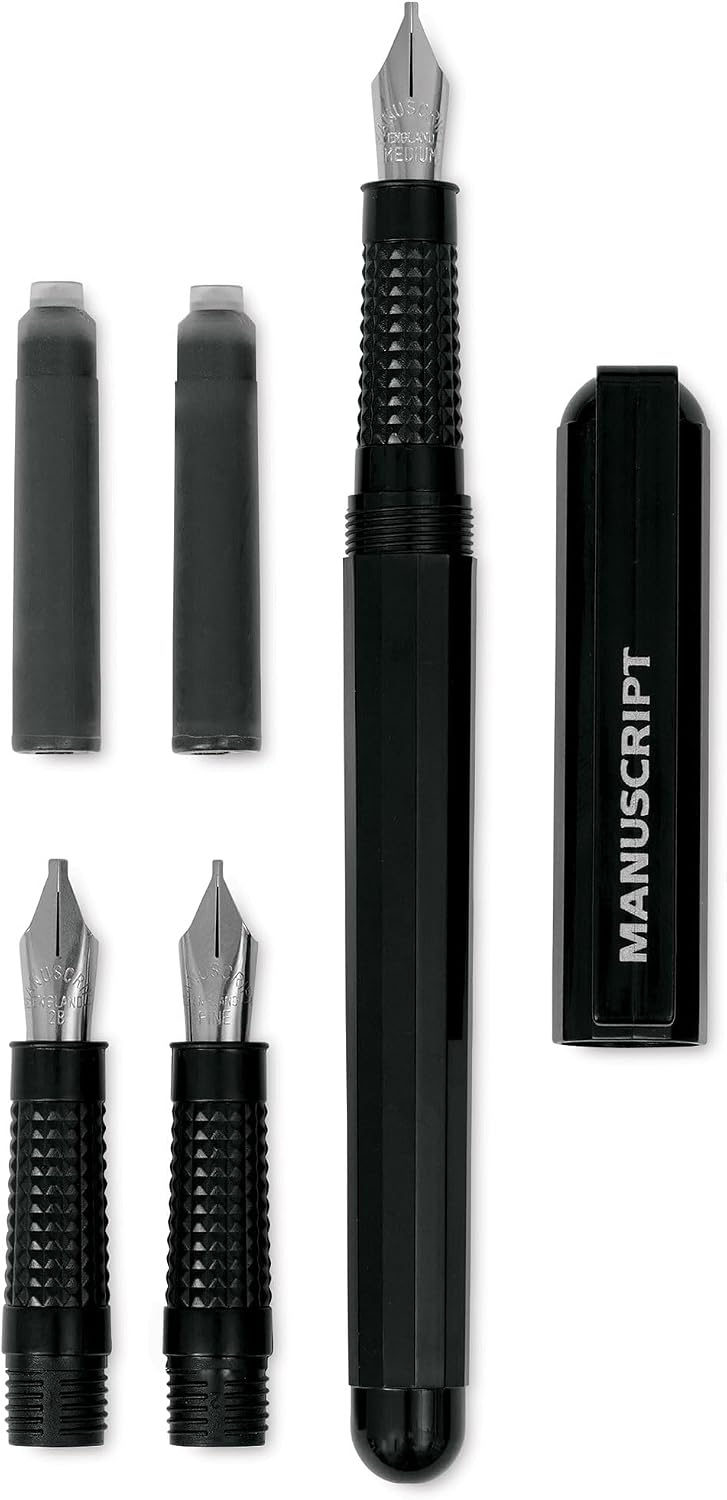
Manuscript Calligraphy Set
$20The cheapest honest way in. A basic dip-pen set with a holder, a handful of nibs, and a bottle of ink — fine for discovering whether you enjoy the dip-pen process before spending more.
What's good
- Genuinely cheap entry point
- Real dip-pen experience, not a toy
- Includes ink and a basic guide
What's not
- Fewer nibs than the Speedball kit
- Ink and paper are basic — you will upgrade
 Best overall starter kit
Speedball Calligraphy Lettering Set
$30The kit to buy if you buy one. Speedball packs a pen, a useful spread of both pointed and broad-edge nibs, ink, and a 48-page instruction book into one box — so you can try several lettering styles and actually learn from the included guide.
What's good
- Both pointed and broad-edge nibs included
- The instruction book is genuinely good
- Everything in one box — no guesswork
What's not
- Still a dip pen — expect some mess while learning
- Paper not included; buy a smooth pad alongside
 Best no-mess upgrade
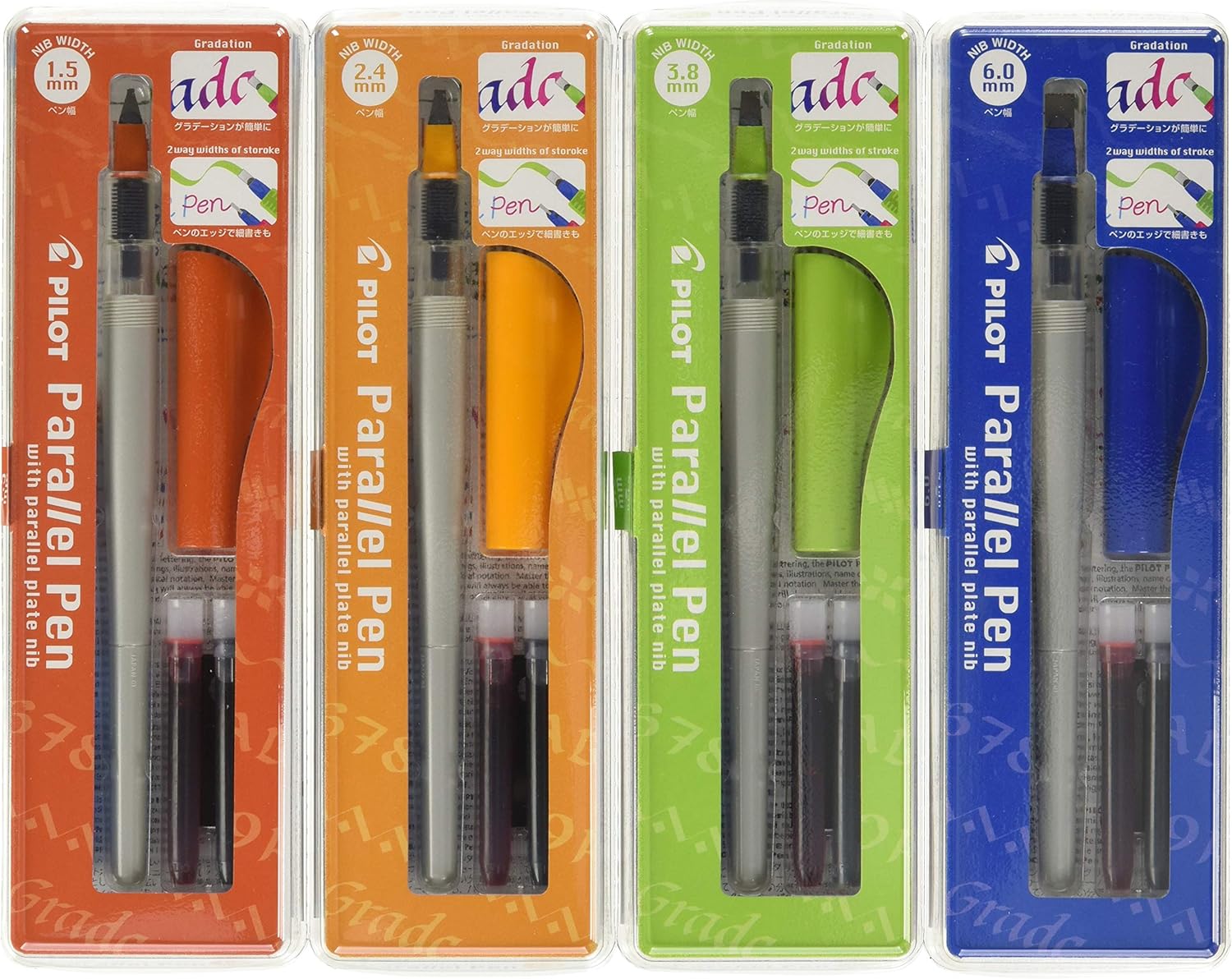
Pilot Parallel Pen Set (4 pens)
$40The mess-free favourite. The Pilot Parallel is a fountain pen, so there is no dipping and almost no blotting — just consistent broad-edge lines. The four-pen set spans fine to bold, and the clever overlapping-nib trick lets you blend ink colours. The easiest way to practise daily without a workspace full of ink.
What's good
- No dipping — practise anywhere, anytime
- Crisp, consistent broad-edge line
- Four widths plus colour-blending tricks
What's not
- Broad-edge only — not for pointed-nib modern scripts
- Cartridges are an ongoing cost
The fastest way to feel like you "cannot do calligraphy" is cheap paper. Printer paper feathers and bleeds, smearing even good strokes. A smooth, heavier marker or layout pad (Rhodia, HP Premium 32lb, or a dedicated calligraphy pad) makes a bigger difference to your first results than any nib upgrade.
Before you buy
Decide your target look first: pointed-nib "modern" scripts vs broad-edge traditional ones use different tools.
Start with one nib and master basic strokes before collecting more.
New dip nibs have a factory coating — wipe them with a little toothpaste or saliva so ink flows.
Keep a jar of water and a rag at hand; clean nibs the moment you finish or ink dries and ruins them.
Buy a smooth practice pad — paper choice affects your results more than the pen at this stage.
Calligraphy kit questions
What is the best calligraphy kit for a complete beginner?
Are brush pens or dip pens better for beginners?
What is the difference between a pointed nib and a broad-edge nib?
Why does my ink feather and bleed?
Do I need special ink?
For most people, buy the Speedball Calligraphy Lettering Set and a smooth practice pad: it gives you both nib styles, ink, and a real instruction book for about $30. If the idea of dipping and cleaning puts you off, start with the Pilot Parallel Pen instead — it is the closest thing to mess-free calligraphy, and you will practise more because of it.
The HobbyStack editorial team researches each guide using practitioner communities, published resources, and direct input from active hobbyists. Every guide is reviewed for accuracy before publication and updated when practices change.
About our editorial process →More gear guides
Best Beginner Mirrorless Camera 2026: Canon EOS R50 vs Sony ZV-E10 II
The best beginner mirrorless camera teaches you photography, not menus. It needs reliable autofocus, a grip that makes sense, and enough image quality to reward good technique. The Canon EOS R50 with its kit lens is the right camera for most people who are just starting out. Here's why — and who should buy something different.
Best Beginner Hiking Boots 2026: Merrell Moab 3 vs Salomon X Ultra 4
Your first hiking boots need to do three things: not blister you, stay dry on wet trails, and grip technical terrain. The Merrell Moab 3 Waterproof checks all three for around $130. Here are three real boots — a non-waterproof breathable option, the waterproof all-rounder, and a stiffer upgrade for rocky terrain — each with a confirmed Amazon link.
Best Mountain Bike Knee Pads for Beginners
Once your trails get real features, knee pads are the highest-value protection you can add — knees hit the ground and the bike most often. Modern flexible pads are comfortable enough to forget you’re wearing them. Here are three, how we chose them, and what to expect.
Best Hydration Packs for Mountain Biking
Once rides get longer than a quick loop, you need water you can drink without stopping — plus room for a spare tube, tools, and a snack. A hydration pack carries it all hands-free. Here are three, how we chose them, and what to expect.
Best Mountain Bike Gloves for Beginners
Gloves are the cheapest, most useful thing to add after a helmet: better grip, less vibration, and saved skin when (not if) you go down. Full-finger, always, for trail riding. Here are three worth pulling on, how we chose them, and what to expect.
Best Golf Rangefinders for Beginners
A rangefinder gives you the exact yardage to the flag, which speeds up play and sharpens your club selection once you know your distances. It’s a luxury, not a necessity — but a good-value one delivers most of a premium model’s usefulness. Here are three, how we chose them, and what to expect.