Woodworking for Beginners: How to Get Started
A complete guide to working with wood — choosing your first tools, reading grain, understanding joinery, and building things that last.
Woodworking is one of the few hobbies where you end every session with something real. A shelf, a bowl, a dovetail joint cut by hand — things you will use, keep, or give away. The craft rewards patience and planning more than raw skill, and the fundamentals are learnable by anyone willing to go slowly at the beginning.
What Woodworking Actually Involves
Woodworking is the craft of shaping, joining, and finishing wood to create functional or decorative objects. It spans everything from carving a spoon with a single knife to constructing furniture with hand-cut mortise and tenon joints that will outlast the person who made them. The range of entry points is unusually wide. You do not need a dedicated workshop or a large budget to begin doing real work.
At its core, every woodworking project follows the same sequence: you measure and mark, cut to shape, join the pieces together, and finish the surface. Getting comfortable with each stage in order is how skill develops. Beginners who try to shortcut the sequence — rushing to the finish before the joinery is solid, for example — consistently produce disappointing results and waste expensive material.
What separates woodworking from most hobbies is the thinking required before any tool touches the wood. A cut made in the wrong place cannot be undone. A joint glued out of square cannot easily be corrected. Learning to plan carefully, mark clearly, and work deliberately is as much the craft as sawing and chiselling. That constraint is also what makes a well-executed project genuinely satisfying.
Styles of Woodworking to Explore
[object Object],[object Object],[object Object],[object Object],[object Object]
Build one small hand tool project before buying any power tools. A simple box with butt joints, a small shelf, or a wooden mallet teaches you measuring, sawing, chiselling, gluing, and finishing in a single project. Completing it tells you more about which direction to pursue next than any amount of research will.
Tools and Materials You Will Need
You can start woodworking for less than most people assume. A focused beginner kit costs well under $150 and handles a wide range of first projects. Here is what actually matters at the beginning:
The non-negotiables — you need these before your first session. No upsell here, just what actually matters to get started safely.


Worth it once you're committed. These items meaningfully improve your experience and are often bought within the first few months.
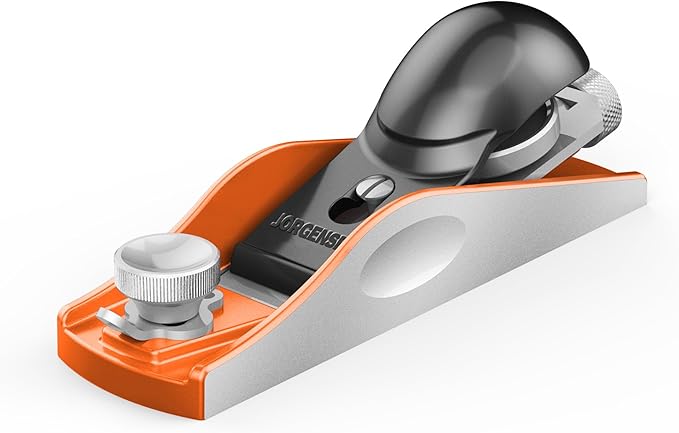

Choosing the right wood for your project matters as much as the tools. Here is a practical overview of the most common species beginners encounter:
| Wood | Type | Best For | Notes |
|---|---|---|---|
| Pine | Softwood | Learning projects, shelves, boxes | Cheap and forgiving. Dents easily. Resin can bleed through paint. |
| Poplar | Hardwood | Painted furniture, practice joinery | Machines well, takes paint beautifully. Pale green tinge fades under finish. |
| Oak | Hardwood | Furniture, shelving, outdoor pieces | Strong and durable. Open grain needs filling for smooth finishes. Reacts with iron. |
| Walnut | Hardwood | Fine furniture, cutting boards, small objects | Rich colour and figure. Easy to work. Expensive. Rewards careful finishing. |
| Maple | Hardwood | Cutting boards, workbenches, tool handles | Very hard and dense. Takes a fine edge. Pale colour shows glue squeeze-out. |
| Cedar | Softwood | Outdoor furniture, storage boxes, lining | Naturally rot and insect resistant. Aromatic. Soft and easy to split at edges. |
Interactive Buyer's Guide
Compare all tiers, track what you own, see your full budget.
How to Get Started Step by Step
Choose one project before buying any tools
Pick something specific — a shelf, a box, a stool. Let the project determine which tools you need rather than speccing out a workshop upfront and then looking for things to build.
Learn to read wood grain before you cut
Grain direction determines how a saw, chisel, or plane behaves. Cutting against the grain causes tear-out. Understanding grain before your first cut prevents the most common beginner frustrations.
Mark every cut with a marking knife, not a pencil
A marking knife scores a fine, precise line into the wood surface. Sawing into that line produces cleaner, more accurate cuts than a pencil line, which is soft and easy to misread.
Dry fit the entire project before applying glue
Assemble every joint without glue first to check fit and identify problems. Once glue is applied, the clock starts. Finding a misaligned joint during dry fit costs seconds; finding it during glue-up can cost the whole project.
Sand through the grits in sequence
Start at 80 or 100 grit and work up through 120, 180, and 220. Skipping grits leaves scratches that are invisible on bare wood and glaringly obvious once a finish is applied.
Apply finish in thin coats, not one thick one
Multiple thin coats of oil or varnish cure properly and build an even surface. A single heavy coat stays tacky, runs, and traps dust. Thin coats with light sanding between them produce a finish that looks intentional.
What to Expect From Your First Project
Here's what typically happens when you start — and why it's useful information, not failure.
<strong>Cuts will wander.</strong> Sawing a straight line freehand is a skill that takes practice. Clamping a straight edge as a fence, or using a mitre box for crosscuts, eliminates the problem entirely until your hand skill develops.
<strong>Joints will have gaps.</strong> Tight-fitting joints require practice with measuring and paring. Small gaps can be filled with a mix of wood glue and fine sawdust. Larger gaps are better addressed by cutting the joint again.
<strong>Finishing will reveal every flaw.</strong> Scratches and mill marks that are hard to see on bare wood become visible the moment you apply oil or varnish. Sanding thoroughly, including a final pass with 220 grit along the grain, is not optional.
<strong>Wood moves.</strong> Solid wood expands and contracts with changes in humidity. Beginners often glue wide panels or attach tabletops in ways that fight this movement, causing cracks over time. Learning about wood movement early prevents problems that only appear months after a project is finished.
<strong>The result will still be satisfying.</strong> A shelf with slightly imperfect joints that you built yourself carries more weight than a flawless flat-pack. Most people who finish a first project immediately start planning the next one.
Beginner Tips That Actually Help
Keep your tools sharp — sharper than you think necessary
A sharp chisel cuts cleanly with light pressure. A dull one requires force, which means less control and more tear-out. Sharpening on a whetstone is a 10-minute skill that improves every project that follows it. The standard test is shaving hair off the back of your forearm. If it does not do that, sharpen it before you use it.
Always work with the grain, not against it
When planing, chiselling, or even sanding, working against the grain lifts fibres out of the surface rather than cutting them cleanly. Look at the grain lines on the edge of a board to determine which direction to work. This is not instinctive at first, but it becomes automatic quickly and makes an immediate visible difference in surface quality.
Clamp more than you think you need to
Glue joints need even, sustained clamping pressure to cure properly. Beginners consistently under-clamp. A good guide is that you should see a thin bead of glue squeezing out evenly along the full length of a joint when you apply clamp pressure. If glue only appears in spots, the joint is not making full contact.
Label every part before assembly
For any project with more than a few components, mark each piece with a pencil on the inside face: what it is, which end is which, and which joint it connects to. Reassembling unlabelled parts during glue-up, under time pressure, with wet glue stiffening the joints, is a reliable way to make an expensive mistake.
Sneak up on final dimensions
Cut pieces slightly long and trim to final size. Pare joinery to fit in small increments rather than one large cut. Wood removed cannot be put back. Working in small steps toward a final dimension takes more time and produces better results than trying to hit a number in one cut.
Study furniture you admire before designing your own
Look at how good furniture is constructed — how corners are joined, how panels are attached, how drawers are fitted. Makers worth studying include James Krenov for refined hand tool furniture, George Nakashima for the expressive use of natural wood, and Sam Maloof for the integration of form and joinery. Understanding why good furniture is built the way it is accelerates design sense faster than any book on the subject.
Common Questions Answered
- Do you need a dedicated workshop to start woodworking?
No. Many beginners start with hand tools on a kitchen table or a small section of garage floor. A workbench — even a simple one built from construction lumber — makes everything easier, but it is not a prerequisite for a first project. Space becomes more of a consideration when you move to power tools and larger furniture. The craft scales to the space available.
- Hand tools or power tools — which should a beginner start with?
Hand tools first. They are quieter, cheaper to start with, require no electricity, and teach you to feel what the wood is doing in a way that power tools do not. A hand saw, a set of chisels, and a plane will complete a surprising range of projects. Power tools make sense once you know which operations you want to speed up and have the space to use them safely.
- How dangerous is woodworking for beginners?
Hand tools carry real risk if used carelessly — chisels and saws cut skin as readily as wood. The good news is that most injuries come from a small set of specific bad habits: cutting toward your body, reaching over a moving blade, using a dull tool with excessive force. Learning those habits and consciously avoiding them removes the majority of risk. Eye protection and attention to body position are non-negotiable from the first session.
- What is the best first project for a complete beginner?
A small box with a lid is widely recommended for good reasons. It requires measuring, straight cuts, joinery at four corners, a fitting lid, and a finished surface — covering almost every fundamental skill in a single small project. A simple shelf is another strong option. Both can be completed in a weekend, and both produce something immediately useful.
- How long does it take to get good at woodworking?
You can produce functional, good-looking work within your first few projects. Developing consistent joinery, confident hand tool use, and an eye for wood takes a year or two of regular work. Mastery — complex furniture, hand-cut dovetails, veneering, chair making — takes considerably longer, but the craft is genuinely rewarding at every level of that progression.
- Is woodworking an expensive hobby to get into?
It does not have to be. A focused hand tool kit for a first project can be assembled for under $100. Costs scale with power tools, a purpose-built workshop, and premium hardwoods. The most practical approach is buying tools as specific projects demand them rather than building out a full shop before you know what you actually need.