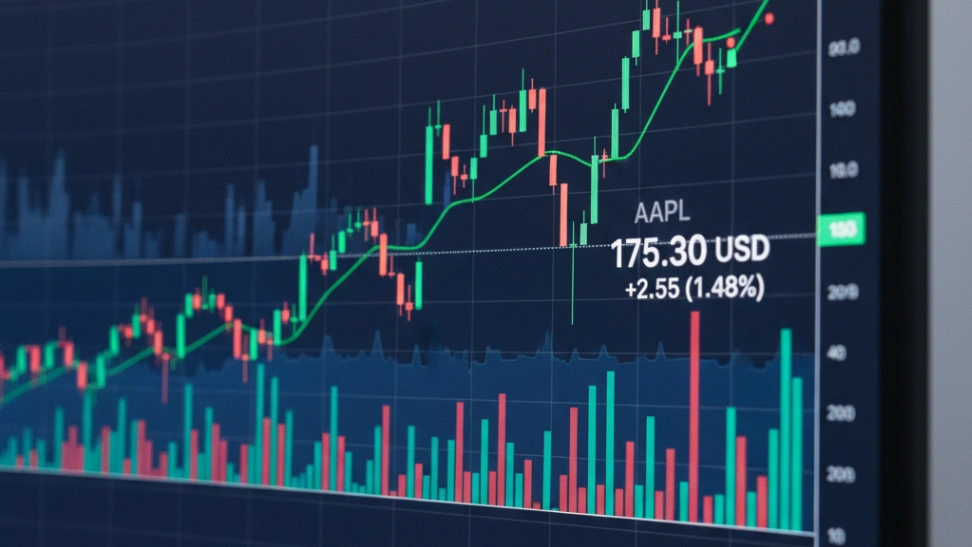
Day trading is a high-octane endeavor focused on profiting from short-term price fluctuations in financial markets. It demands an unwavering commitment to discipline, rigorous analytical skills, and the ability to manage emotional responses under pressure. Unlike long-term investing, day traders enter and exit positions within the same trading day, seeking to capitalize on intraday volatility. Success hinges on developing a robust trading strategy, understanding market dynamics, and employing effective risk management techniques. It is not a passive income stream but an active, demanding profession that requires continuous learning and adaptation to ever-changing market conditions. The allure lies in the potential for significant returns, but this is balanced by substantial risk and the probability of losses.
For the highly disciplined individual driven by analytical challenges and comfortable with calculated risks.
Your journey starts here. Follow these steps to get started with Day Trading.
Before risking real capital, open an account with a reputable brokerage that offers a paper trading or simulated trading environment. This allows you to practice executing trades with virtual money in real market conditions. Look for platforms like TD Ameritrade's thinkorswim, Interactive Brokers' Trader Workstation, or E*TRADE's platform, all of which provide robust simulation tools. Understand the platform's interface, order types, and charting capabilities without financial risk. Analyze your simulated performance objectively to identify strengths and weaknesses.
Define a clear, repeatable trading strategy based on specific technical indicators, price action, or market patterns. Common strategies include scalping (very short-term trades), trend following, or mean reversion. Research different strategies and backtest them using historical data or your simulator. Your strategy should outline entry and exit rules, risk parameters (stop-loss levels), and profit targets. Document your strategy meticulously.
Implement strict risk management rules for every trade. Determine the maximum percentage of your capital you are willing to risk per trade (e.g., 1-2%). Use stop-loss orders religiously to limit potential losses. Understand position sizing to ensure that even a losing trade does not significantly deplete your capital. Never trade money you cannot afford to lose.
Gain a deep understanding of how macroeconomic factors, company news, and market sentiment can influence price movements. Simultaneously, learn to read and interpret technical indicators such as moving averages, RSI, MACD, and volume on various timeframes. Resources like Investopedia and the website of the Securities and Exchange Commission (SEC) are excellent starting points for understanding market mechanics and regulations.
Our top picks for core tools to get you started.
Recommended items to enhance your experience.
As an Amazon Associate, HobbyStack may earn from qualifying purchases. Prices are estimates.
Jumping into trades based on gut feelings or tips without a defined strategy and risk management plan is a fast track to financial ruin. Stick to your pre-defined rules, even when emotions run high.
Using excessive margin can magnify both profits and losses. While leverage can be a tool, inexperienced traders often misuse it, leading to catastrophic account blow-ups on minor market movements.
Failing to cut losing trades quickly or averaging down on a losing position often turns small losses into devastating ones. Accept that losses are part of trading and adhere to your stop-loss levels.
A hobby's core characteristics, based on community votes.
63% Solo
You prefer personal and solitary activities, perfect for quiet time and introspection.
70% Energetic
You're drawn to high-energy activities that get your heart pumping and body moving.
89% Indoors
You are a homebody at heart, finding the most comfort and inspiration within your own space.
30% Technical
You tend to prefer structured activities but enjoy a little creative flair.
80% Mental
You are a deep thinker who finds the most joy in complex, intellectual challenges that require pure brainpower.
Based on 24 total trait votes.
If you like Day Trading, you might also enjoy these related hobbies.
Dive deeper with these community-recommended websites, guides, and forums.
A comprehensive financial education website with extensive articles, tutorials, and definitions related to day trading and financial markets.
Official government resource outlining the risks associated with online trading and essential investor protections.
While focused on Forex, this site offers beginner-friendly trading education that is transferable to other markets, with a structured curriculum.
The difference between the highest price a buyer is willing to pay (bid) and the lowest price a seller is willing to accept (ask).
An order placed with a broker to buy or sell a security when it reaches a certain price, intended to limit an investor's loss.
Trading with borrowed funds from a broker, amplifying potential gains and losses.
A trading discipline employed to evaluate securities by analyzing statistics generated by market activity, such as past prices and volume.
The ease with which an asset can be bought or sold in the market without affecting its price.
This hobby's profile is shaped by the community. See what's most popular and cast your own vote to refine its identity.
Many users also associate Day Trading with Business & Entrepreneurship.
A number of users see a connection between this hobby and Technology & Engineering.
A number of users see a connection between this hobby and Science & Exploration.
Day trading is a high-octane endeavor focused on profiting from short-term price fluctuations in financial markets. It demands an unwavering commitment to discipline, rigorous analytical skills, and the ability to manage emotional responses under pressure. Unlike long-term investing, day traders enter and exit positions within the same trading day, seeking to capitalize on intraday volatility. Success hinges on developing a robust trading strategy, understanding market dynamics, and employing effective risk management techniques. It is not a passive income stream but an active, demanding profession that requires continuous learning and adaptation to ever-changing market conditions. The allure lies in the potential for significant returns, but this is balanced by substantial risk and the probability of losses.
For the highly disciplined individual driven by analytical challenges and comfortable with calculated risks.
Your journey starts here. Follow these steps to get started with Day Trading.
Before risking real capital, open an account with a reputable brokerage that offers a paper trading or simulated trading environment. This allows you to practice executing trades with virtual money in real market conditions. Look for platforms like TD Ameritrade's thinkorswim, Interactive Brokers' Trader Workstation, or E*TRADE's platform, all of which provide robust simulation tools. Understand the platform's interface, order types, and charting capabilities without financial risk. Analyze your simulated performance objectively to identify strengths and weaknesses.
Define a clear, repeatable trading strategy based on specific technical indicators, price action, or market patterns. Common strategies include scalping (very short-term trades), trend following, or mean reversion. Research different strategies and backtest them using historical data or your simulator. Your strategy should outline entry and exit rules, risk parameters (stop-loss levels), and profit targets. Document your strategy meticulously.
Implement strict risk management rules for every trade. Determine the maximum percentage of your capital you are willing to risk per trade (e.g., 1-2%). Use stop-loss orders religiously to limit potential losses. Understand position sizing to ensure that even a losing trade does not significantly deplete your capital. Never trade money you cannot afford to lose.
Gain a deep understanding of how macroeconomic factors, company news, and market sentiment can influence price movements. Simultaneously, learn to read and interpret technical indicators such as moving averages, RSI, MACD, and volume on various timeframes. Resources like Investopedia and the website of the Securities and Exchange Commission (SEC) are excellent starting points for understanding market mechanics and regulations.
Our top picks for core tools to get you started.
Recommended items to enhance your experience.
As an Amazon Associate, HobbyStack may earn from qualifying purchases. Prices are estimates.
Jumping into trades based on gut feelings or tips without a defined strategy and risk management plan is a fast track to financial ruin. Stick to your pre-defined rules, even when emotions run high.
Using excessive margin can magnify both profits and losses. While leverage can be a tool, inexperienced traders often misuse it, leading to catastrophic account blow-ups on minor market movements.
Failing to cut losing trades quickly or averaging down on a losing position often turns small losses into devastating ones. Accept that losses are part of trading and adhere to your stop-loss levels.
A hobby's core characteristics, based on community votes.
63% Solo
You prefer personal and solitary activities, perfect for quiet time and introspection.
70% Energetic
You're drawn to high-energy activities that get your heart pumping and body moving.
89% Indoors
You are a homebody at heart, finding the most comfort and inspiration within your own space.
30% Technical
You tend to prefer structured activities but enjoy a little creative flair.
80% Mental
You are a deep thinker who finds the most joy in complex, intellectual challenges that require pure brainpower.
Based on 24 total trait votes.
If you like Day Trading, you might also enjoy these related hobbies.
Dive deeper with these community-recommended websites, guides, and forums.
A comprehensive financial education website with extensive articles, tutorials, and definitions related to day trading and financial markets.
Official government resource outlining the risks associated with online trading and essential investor protections.
While focused on Forex, this site offers beginner-friendly trading education that is transferable to other markets, with a structured curriculum.
The difference between the highest price a buyer is willing to pay (bid) and the lowest price a seller is willing to accept (ask).
An order placed with a broker to buy or sell a security when it reaches a certain price, intended to limit an investor's loss.
Trading with borrowed funds from a broker, amplifying potential gains and losses.
A trading discipline employed to evaluate securities by analyzing statistics generated by market activity, such as past prices and volume.
The ease with which an asset can be bought or sold in the market without affecting its price.
This hobby's profile is shaped by the community. See what's most popular and cast your own vote to refine its identity.
Many users also associate Day Trading with Business & Entrepreneurship.
A number of users see a connection between this hobby and Technology & Engineering.
A number of users see a connection between this hobby and Science & Exploration.